
While the world stares with the baited breath at what promises to be a protracted, tumultuous and bloody US-Israel war on Iran, India’s “biggest internal security threat” seems all but over.
As the March 31, 2026, deadline – a timeline set in 2024 by the Union Home Minister Amit Shah to end the Maoist insurgency – came to end, there was a sense of jubilation in the central and state governments over staying course with the target. At least 43 Maoists, among the last ones with arms, surrendered before Andhra Pradesh, Chhattisgarh and Maharashtra on March 31 – they also handed over about seven kg gold and Rs 3 crore in cash, and came overground.
As Shah said in a long speech in the Parliament on March 30, 2026, celebrating the Centre’s victory and denigrating the opposition (mainly the Congress and the left), that naxalism has been “more or less wiped out.” Barring two top leaders of the banned CPI (Maoist) – founder chief Mupalla Lakshamana Rao alias Ganapathy and Misir Besra alias Sagar, rest others have either been neutralized or surrendered. Ganapathy and Besra are old and reportedly ailing.
Its central leadership dismantled; its politburo neutralised; its armed strength reduced to a residual presence in a handful of forested pockets, there are, Shah indicated, only fragments left: a few senior leaders still underground or in tentative contact, a scattering of armed cadres, and an insurgency that has lost both its command structure and its territorial coherence.
Odisha, Maharashtra, Andhra Pradesh, and Telangana have already declared themselves free from the red rebels. Maoist insurgency in Maharashtra was anyway limited to two districts – Gondia and Gadchiroli. But in the past four years, almost all the active armed cadres were either killed or they decided to surrender. The Maharashtra government in mid-March officially wrote to the central government to withdraw the districts from the list of left-wing-affected areas. The union ministry has reclassified the two districts as legacy and thrust (L&T) districts, an official way to say the districts are free from the red tag, but where government needs to consolidate.
The Slow Collapse
What appears today as a sudden end has, in fact, been a slow, grinding collapse.
As the security and intelligence gaps got filled up with erection of mobile towers, better road connectivity, and delivery of welfare in the tribal hinterland of central India, including Bastar, where the Maoists enjoyed a free reign for decades, the movement got systematically hollowed out. Its top leadership – men who once commanded entire regions across what was called the “Red Corridor”— were killed, captured, or pushed into isolation. Mass support waned.
Go back to 2009, when the Operation Green Hunt was launched, when the Maoists had a decisive upper hand and could strike at the security forces anywhere at their will, and compare that with the shifting landscape today, and one realises this was a battle of will and guts.
Two major operations last summer – one that led to the killing of its general secretary Nambala Keshava Rao alias Basavaraju in Abujh Madh, and the second one lasting over a month in Karre Gutta hills bordering Bijapur in Bastar and Telangana – signalled a devastating last blow to the banned outfit. What followed in the months was the neutralisation of top leaders like Madvi Hidma, Ganesh Uikey, Satyanarayana Reddy alias Kosa, and Ramchandra Reddu alias Chalapati, and surrender of other high profile leaders such as Mallojula Venugopal Rao (Sonu or Bhupathi), Barse Deva and Thippiri Tirupathi (Devuji). The writing was on the wall – loud and clear.
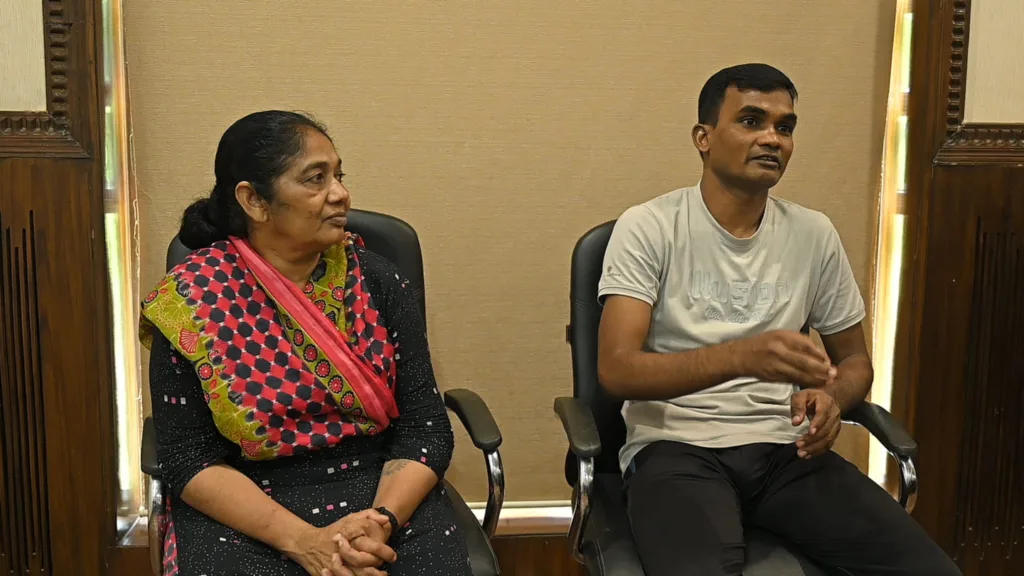
On the ground, the change is starker. Security officials estimate that the armed strength of the People’s Liberation Guerrilla Army, which once ran into several thousands, has shrunk to a few dozen at most, scattered across the different states, without any leadership. The last big leader in south Bastar named Pappa Rao came out with his team of 17 cadres on March 29.
Surrender and rehabilitation policies across different states have played a decisive role.
In Chhattisgarh alone, hundreds of cadres —some of them mid-level commanders —have laid down arms over the past few years, drawn by a mix of pressure and policy: cash incentives, housing, and the promise of a life outside the forest. Ditto for Maharashtra, Odisha, Andhra and Telangana. The state’s strategy has been clear: isolate the leadership, fragment the ranks, and offer the foot soldiers a way out. It worked, even as the pressure of security operations built up. Central India is the most militarised regions in India, with about a hundred forward operating bases right in the heart of Abujh Madh, a once impregnable hilly citadel of the Maoists.
The War That Was
To understand the significance of this moment, one must return to the scale of what is ending.
The Maoist insurgency—rooted in the Naxalite uprising of 1967 and consolidated with the formation of CPI (Maoist) in 2004—was never a peripheral disturbance. It was, at its peak, India’s most widespread internal conflict, stretching across more than 200 districts.
Since 2000 alone, over 12,000 people have been killed in Maoist-related violence—civilians, security personnel, and insurgents, according to the data maintained by security watch, South Asia Terrorism Portal (SATP). That includes of over 4000 civilians, 2700 security personnel and nearly 5000 Maoists. Government figures suggest that more than 5,000 security personnel lost their lives over the decades since the naxal uprising in the 1960-70s. Entire regions lived under a shadow where the state’s presence was sporadic, and the Maoist rebels’ writ ran deep. There was a time not long ago when the Maoists ran Janatana Sarkar in what they called liberated zones.
In places like Bastar or Gadchiroli, the conflict was not an abstraction. It was embedded in everyday life: in the fear of stepping out after dusk, in the knowledge that a road could be mined, in the silence that followed an encounter. Tribal villages were caught in a brutal in-between—suspected by both sides, punished by both. The insurgency drew strength from long-standing grievances: land alienation, forest rights, state neglect, and the violence of extraction economies. But it also imposed its own regime—of control, coercion, and, often, retribution.
Why the State Prevailed
The state’s eventual dominance rests on a convergence of strategies.
As this writer reported comprehensively last June (2025) that a combination of strategies were at play, particularly in Bastar region, where the last nail was put in the coffin.
First, the forces targeted the banned outfit’s leadership. Earlier approaches often focused on area domination—holding territory, running patrols. In recent years, highly specific intelligence-led operations took down top leaders, disrupting command chains and creating internal disarray.
Second, a lucrative surrender-and-rehabilitation policy was refined and aggressively implemented. Aim was to disarm the movement: so there was big incentive to give up sophisticated arms and reveal the buried ammunition. By creating a clear exit route for lower and middle-rung cadres, the state thinned the insurgency from within. Cadres could return once they laid down arms.
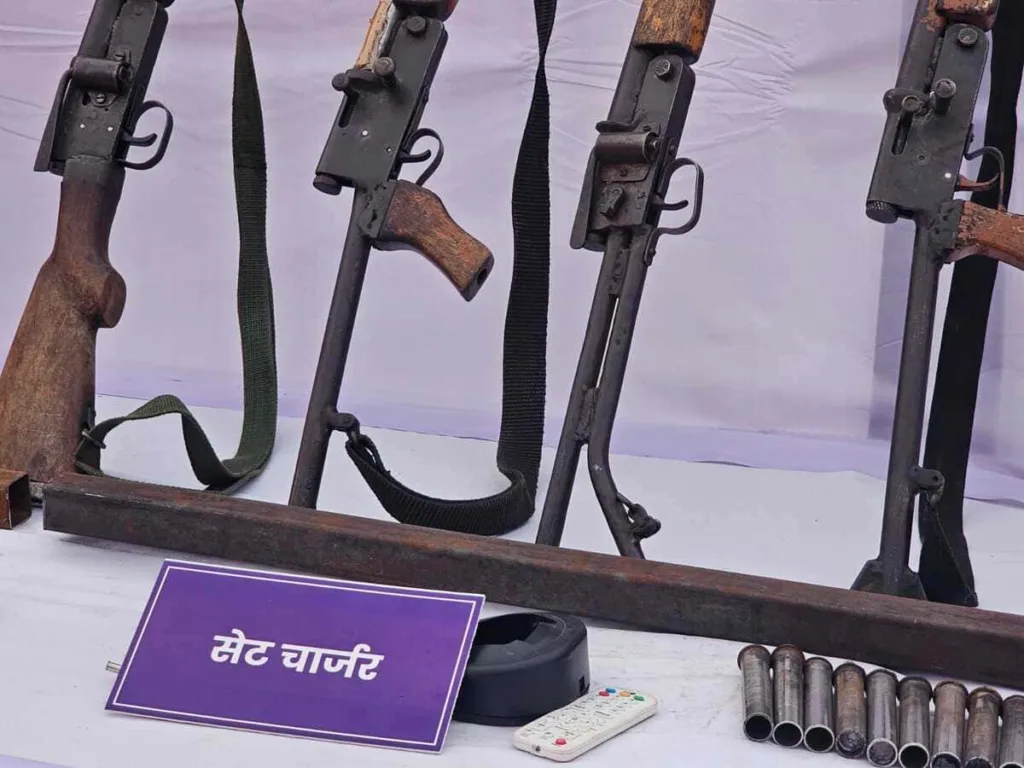
Save a few jarring exceptions, most states maintained a very high credibility with their surrender policy. The cadres and leaders were not neutralised when they wanted to come out.
Third, there has been a visible expansion of infrastructure and welfare in previously inaccessible areas, though the political and administrative vacuum still persists.
Roads have cut into forest interiors; mobile towers have followed; ration shops, health centres, and schools—however uneven—have marked the state’s arrival. In places like Abujh Madh miles and miles of new roads have altered both mobility and surveillance.
Then, the shrinking geography of the insurgency mattered. What was once a broad corridor shrunk to few pockets. Containment made concentration—and therefore targeting—easier.
Finally, there was a vertical split in the movement over its future, as indicated by the letter written to his comrades last August by Mallojula Venugopal Rao. He declared the protracted war had no future left, and that it was better to surrender and continue to work for the masses within the constitutional framework. Months later, he surrendered before the Gadchiroli police after spending five decades in forests, marking the end of an era. The party unravelled soon after.
Not a Clean End
And yet, to call this a clean end would be misleading.
A section of security officials think the insurgency will not disappear; it has retreated and adapted. The troops will need to be watchful of the residue formation, who rely on improvised explosive devices, smaller units, and localised actions rather than large-scale confrontations.
More importantly, the conditions that fed the insurgency have not entirely vanished.
In many Adivasi regions, questions of land, forest rights, displacement, and access to justice remain unresolved. The expansion of mining and infrastructure projects—now likely to accelerate in the absence of armed resistance—could reopen old fault lines. Central Indian forests sit on rare earth and other critical minerals including iron ore. The fall of the Maoists is already witnessing a sudden burst in mining activities all over Bastar and Gadchiroli.
There is also the question of memory. Communities that lived through decades of violence—caught between Maoists and the state—carry scars that do not fade with the lowering of a gun.
Central India’s forests – the whole of the mythical Dandakaranya spanning Maharashtra, Madhya Pradesh, Chhattisgarh, Odisha and contiguous forests of Telangana and Andhra Pradesh – would not be the same again. The vacuum left by perhaps the longest of the country’s internal insurgencies, which was never secessionist, would take the next few decades to fill up.
What replaces an uprising is often as important as how it ends. The Maoists had mobilised close to ten million people in central India, mostly tribals and primitive vulnerable tribal groups. There are reports from Bastar region that the security apparatus has put several villages under strict surveillance, raising questions about how the Indian state will deal with the poor tribals who have lived under the shadow of this conflict for about five decades, with devastating consequences.
In several Maoist-affected areas, the rebels had, over time, built parallel systems—janatana sarkars, informal courts, mechanisms (however coercive) for dispute resolution. Their withdrawal leaves a governance vacuum. The state now faces a different challenge: not of defeating an armed enemy, but of establishing legitimacy.
Will roads be followed by functioning schools and hospitals? Will forest rights claims be settled with fairness? Will local communities have a meaningful say in decisions that affect their land? Will they be trusted by a suspecting police administration. Gadchiroli and some other districts provide a template, in that, they have earnestly implemented the Forest Rights Act by granting community forests rights to the Gram Sabhas, but will the states like Chhattisgarh follow that template? And do they have the political will and social legitimacy to do that?
There is also the delicate task of reintegration. Thousands of former cadres and top Maoists who have laid their arms must find a place in society—jobs, acceptance, a future that does not pull them back into the forests or leave them isolated or aggrieved. And there is the risk—seen in other conflict zones—that a purely security-driven approach could persist even after the threat has receded, leaving behind a heavily militarised landscape without a corresponding deepening of democracy. The Indian state can, with some justification, claim that it has won the war.
But what comes next will determine whether it wins something harder: the peace.