

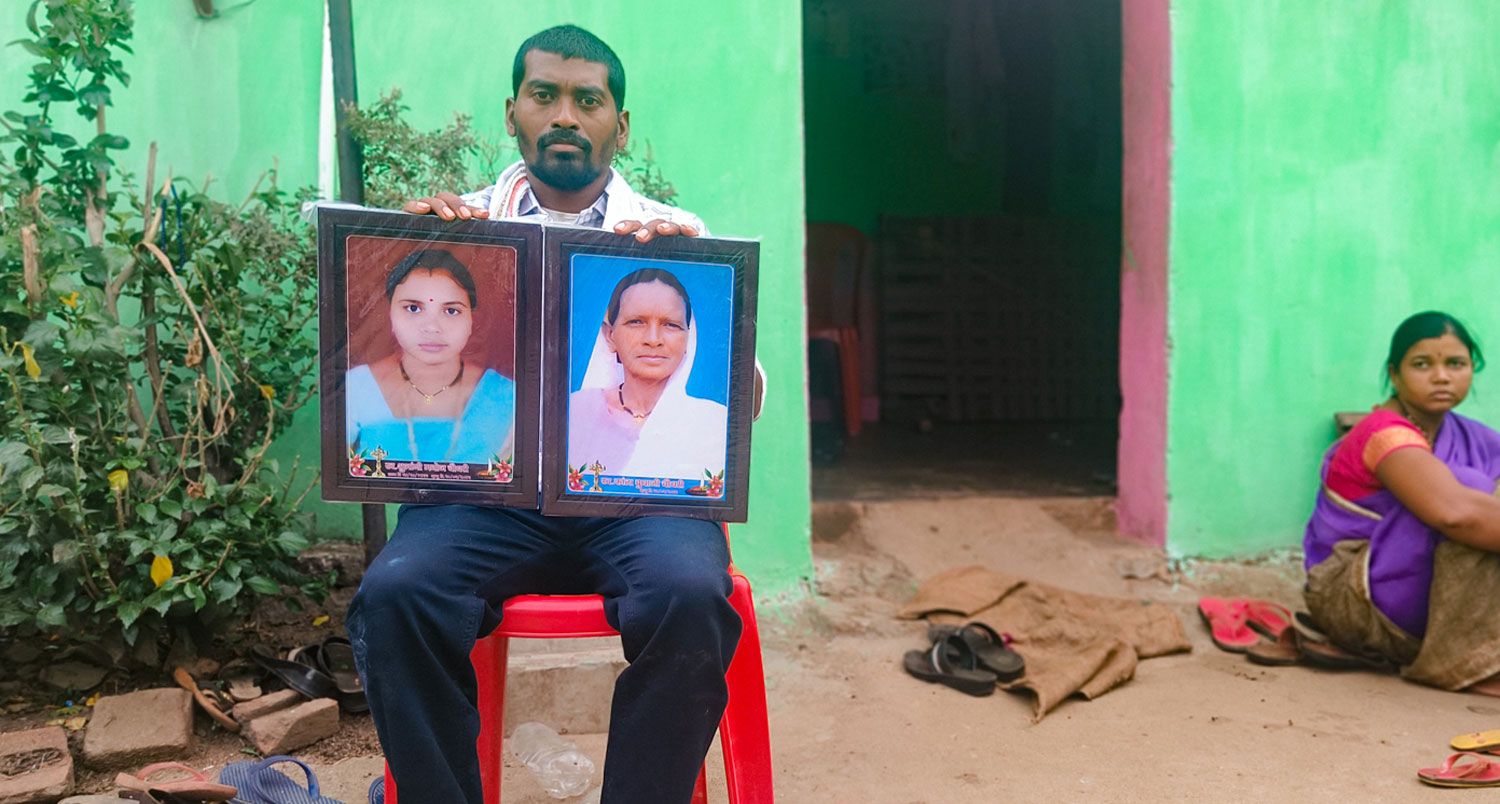
Manoj Chaudhari’s world took seconds to collapse.
“My mother and my wife were my world, and now my two children are all that I am left with,” says the 35-year-old Manoj, speaking at his home in rural Chandrapur.
“My children and I were still asleep when my mother and wife left for the forests.” Hours later on May 10, 2025, Kanta Budhaji Chaudhari, 60, and Shubhangi, 30, were killed in a tiger attack in a shrub forest two kilometres from their village. Their neighbour Sarika Shalik Shende, around 50, was the third victim.
The three women, along with others, had gone to the forest to collect tendu leaves.
Mendha (Maal), a village of over a thousand people in Chandrapur district of Maharashtra, plunged into grief. The villagers are mostly small farmers or landless workers, like Manoj, who migrate seasonally to cities across the state and country. During the months of March, April and May every year, they gather tendu leaves and mahua flowers from the forest to supplement their income.
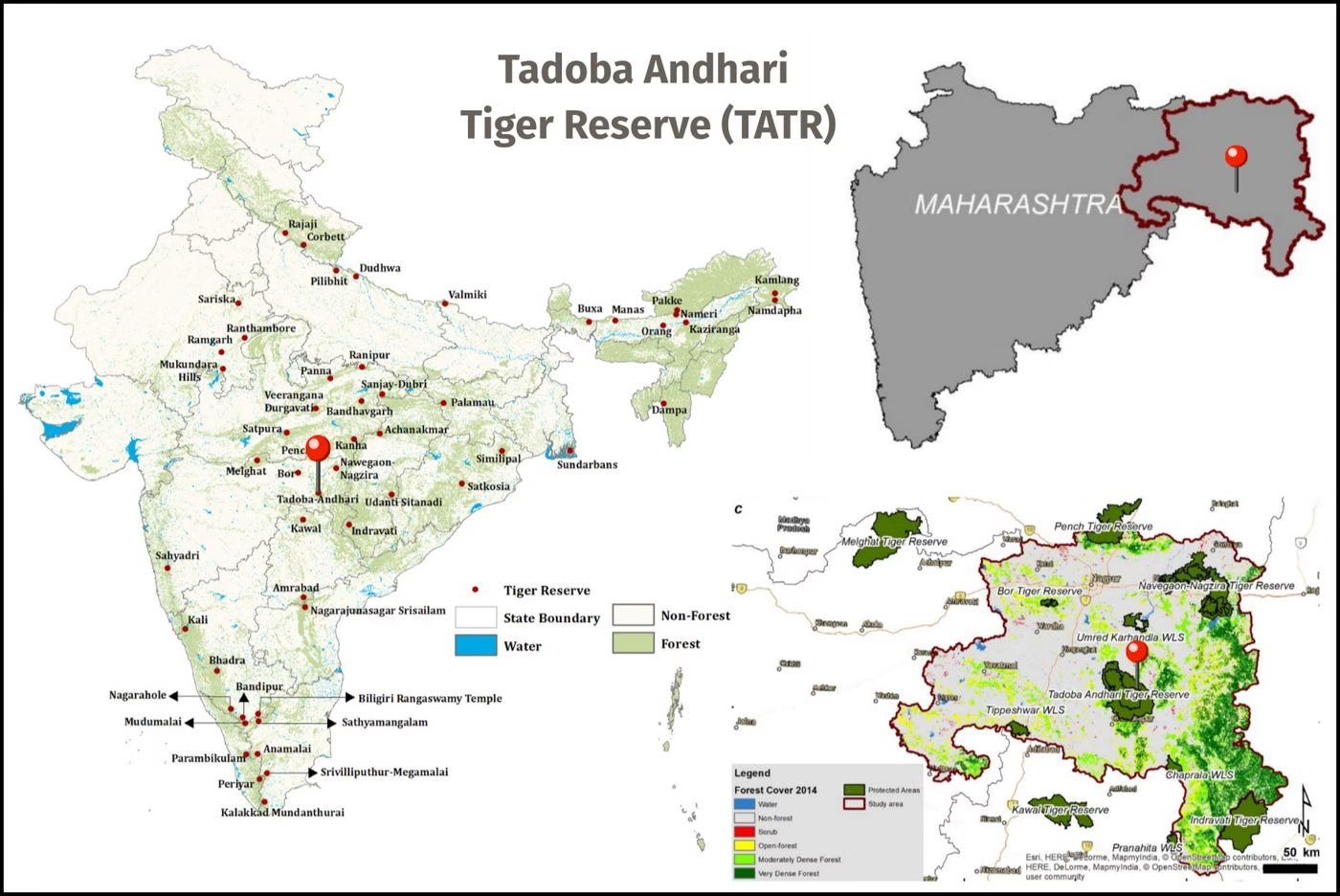
The village in Sindewahi tehsil, is listed as Mendhamal Gujari in official records, but a sign outside the village announces it as ‘Mendha (Maal)’. It lies near the Tadoba Andhari Tiger Reserve (TATR) that has a core or inviolate area of 625 square km and a buffer area – around the reserve with human population – of about 1,102 square kilometeres.
Chandrapur district has 223 tigers with about 120-125 within the TATR, according to the latest forest department data. Going by the accounts of several villagers, this was the first time anyone at Mendha (Maal) had been killed by a big cat.
The three women were mauled by a tigress with three cubs, the villagers say, citing police and forest officials.
The deaths triggered an uproar, sparked brief protests, and prompted the local legislator and other politicians of the district to stop by to pacify the bereaved family members and villagers.
 Jaideep Hardikar
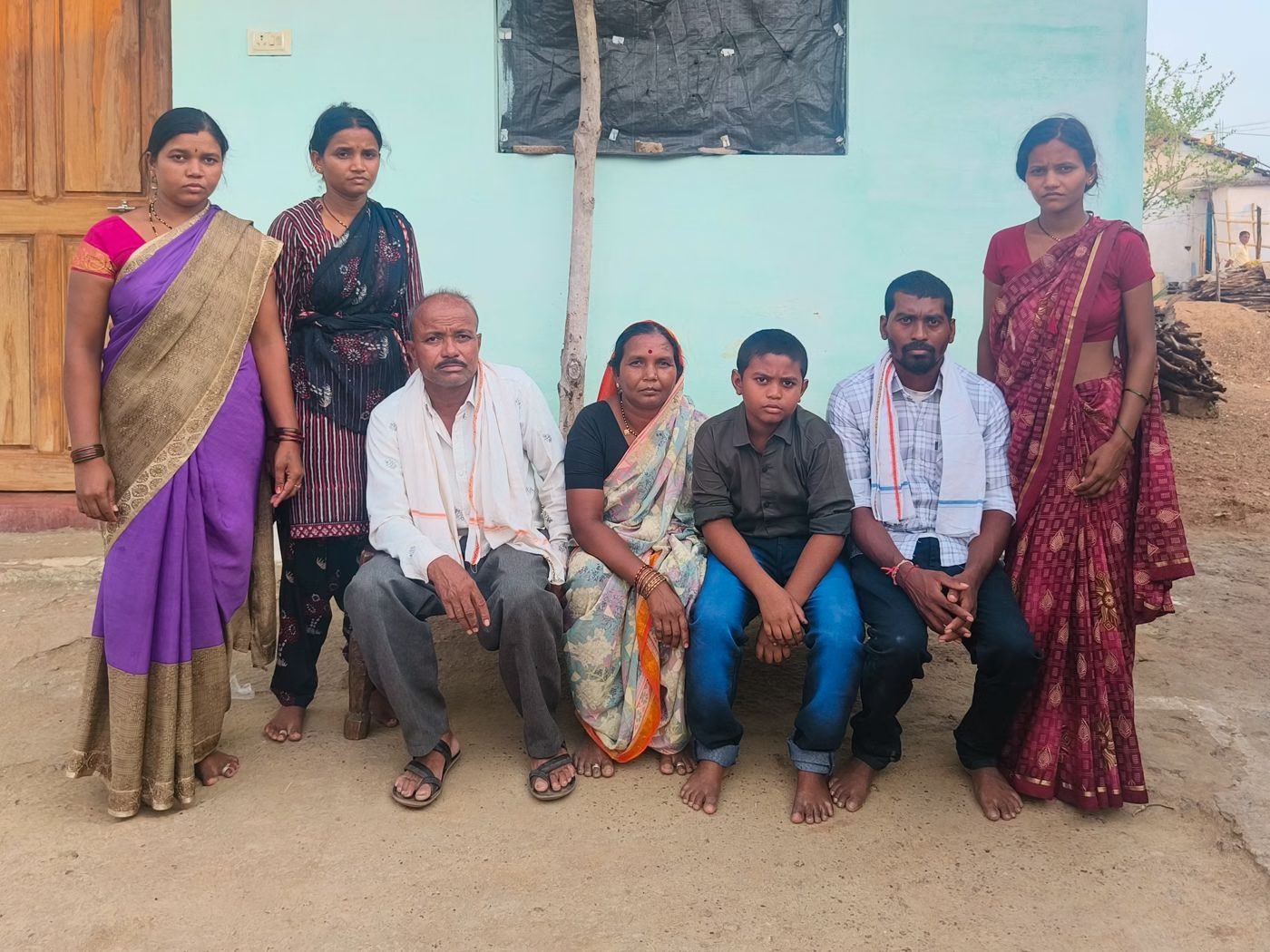
Surekha and Khushal Wadhai (Shubhangi’s parents) seated with son-in-law Manoj Chaudhari and his son. Standing (from left) are Shubhangi’s sisters: Sheetal Mandale, Shilpa Gurnule, Shalina Bhendale
As Manoj recalls the morning of May 10, his face clouds with confusion, fear, anger, and uncertainty. His children are young – Shoham is 10, and Aradhya 8 – and they will grow up without a mother. He recalls that it was past 11 a.m. that day and he was at the brick kiln near the village where he works for daily wages, when a relative came calling with concern. The three women had not yet returned home. They were usually home by 9:30 a.m.
When the three did not show up by 12 noon, while the other women had returned at the usual time, Manoj and his friends launched a search in the forest patch, but found no trace of them. Quickly, the villagers intimated the forest department; and the forest rangers and villagers split into search teams. Finally, the bodies were traced around 4 p.m. in a shrub forest some distance from the farms. The women lay dead 15 metres apart, badly mauled; they had likely stood no chance against the massive tigress with three small cubs, the villagers say.
The entire village and people from the vicinity turned up for the cremation the next morning.
When PARI visited in June 2025, the village was still in a state of shock.
The wild cat might have pounced on the women from behind when they bent to pick the leaves. Their bodies were disfigured, and it seemed to the villagers that they had been held by their neck, as tigers do with their prey. But this was not a man-eater, say forest officials. The tigress retreated into the forests leaving the victims in the thickets. The forest department calls it an accident.
“It could have been me that morning,” says Kantabai Shende, 60, grieving for her friends but thanking providence that she is alive. Kantabai is a relative and was a neighbour of Sarika Shende; both the Shendes and the Chaudharis live next door. Every summer, they would go together to pluck the leaves.
Tendu (Diospyros melanoxylon) leaves are rolled to make beedis, and are an assured income for villagers living near forests. The tragedy abruptly ended the tendu collection season, resulting in financial loss for her and others, Kantabai says. The fear was such that no woman dared enter the forests again. That was only the third day of the 2025 tendu collection season in Mendha (Maal).
While the harvest months are from March to May, the collection season varies from village to village and lasts as long as it takes to gather all the produce from the local trees. So, a season can last anything between 15 days and three months.
 Jaideep Hardikar
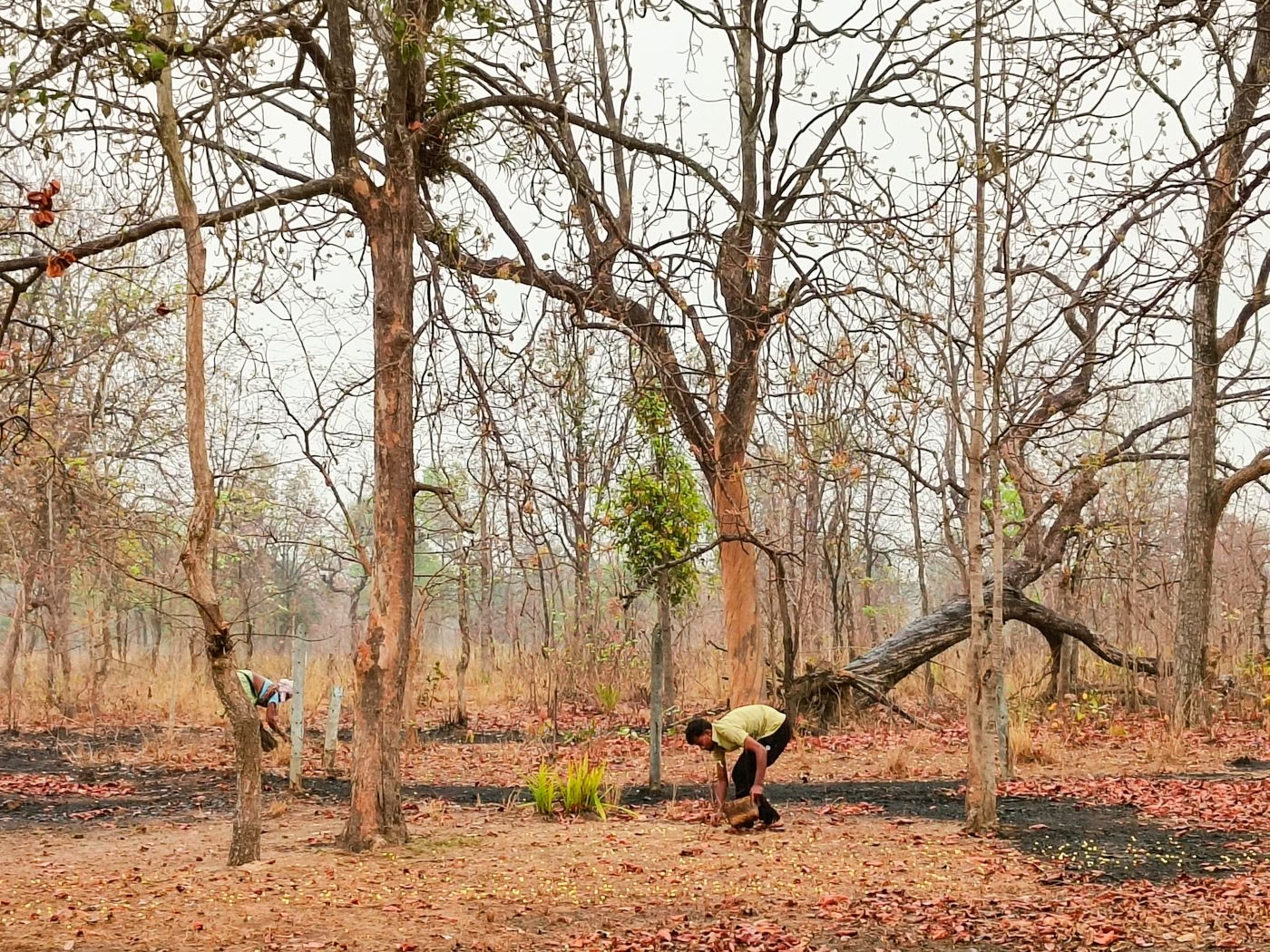
Tadoba Andhari forests have mahua and tendu trees
Jaideep Hardikar
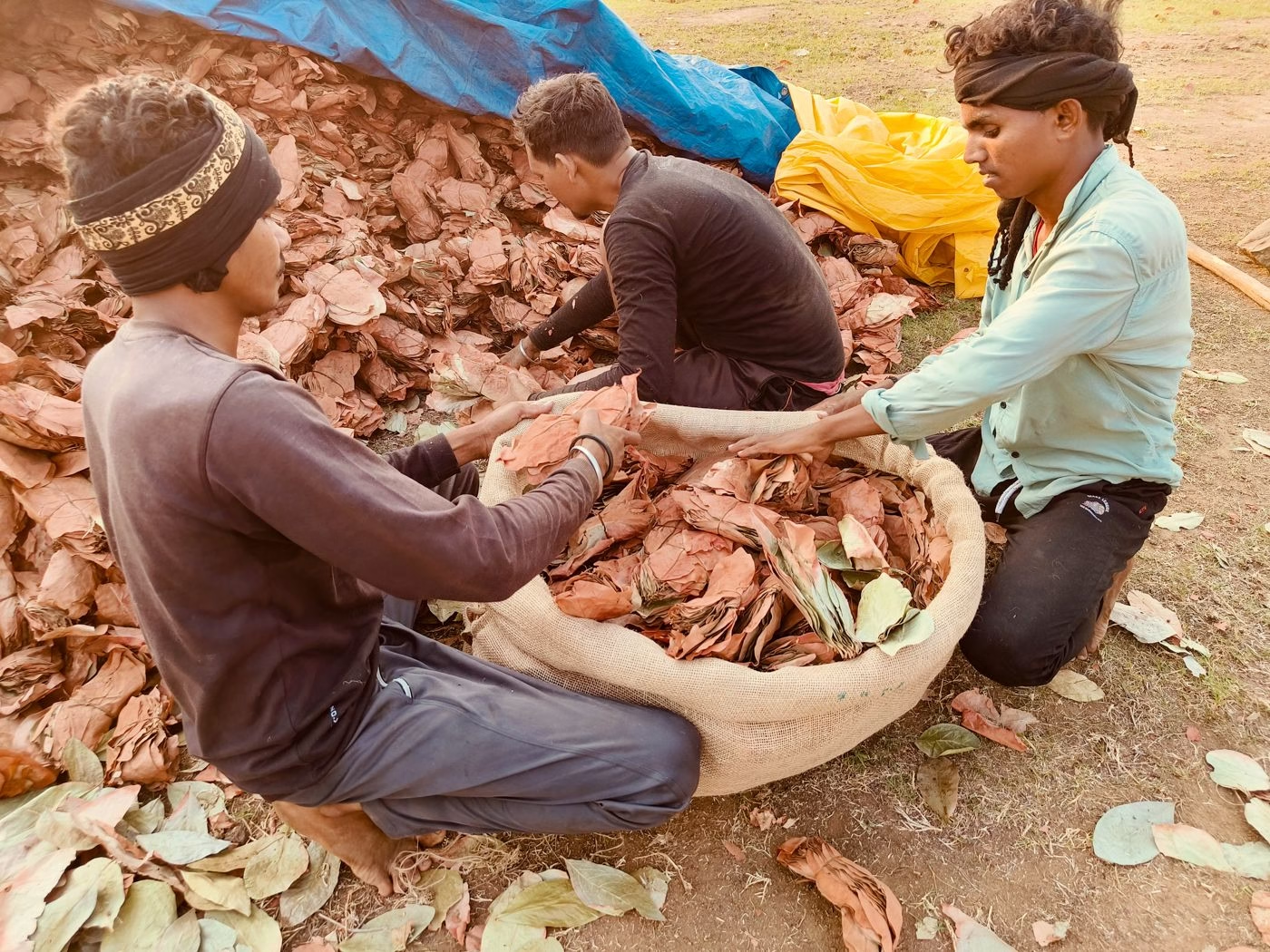
In Chandrapur and Gadchiroli districts, tendu leaves are dried in the sun
Chandrapur district has recorded 24 deaths in tiger and leopard attacks in different parts of the TATR landscape (in territorial or non-protected forests) from March to May 2025. These are the driest and hottest months, when the villagers enter forests to collect mahua flowers and tendu leaves. This is also a time when the big carnivores are roaming in search of food and water.
“We knew there were tigers in the jungle – I had heard of many incidents in which people died in tiger attacks; lots of them are moving around in our area too,” says a bearded Manoj, holding framed photographs of his wife and mother. “But we never thought such a calamity would strike us.”
*****
About 50 kilometres from Mendha (Maal), recounting another incident, Vilas Jambhule, 58, did not think either that he would have to cremate his elder brother, Vinayak, this soon.
“The morning on the day he died, we had spoken about how this mahua season has been dull,” says Vilas, a police patil of Chichkheda village in Bramhapuri tehsil. (A police patil is a village-level law enforcement official appointed by the district collector). “He left to collect mahua flowers and never returned,” he says.
Vilas is a farmer and a small trader of mahua, aggregating the produce that fellow villagers collect. The flowers are used in food and medicine and to brew alcohol. He says his brother, who was killed in a tiger attack on April 13, 2025, farmed on two acres, and relied on mahua and tendu to add to his family income during the summer.
“Income from farming is zero,” says Jambhule, listing a number of factors to explain why farming is not remunerative: low productivity, rising costs of inputs, sluggish prices and no allied income. “This – the mahua and tendu – provides at least 25,000-30,000 rupees for a family over two months,” he says.
The late Vinayak was 60; he is survived by his wife Bachchala and son Ashish, who received Rs. 10 lakh in compensation from the forest department. “That won’t bring back our man,” says Bachchala.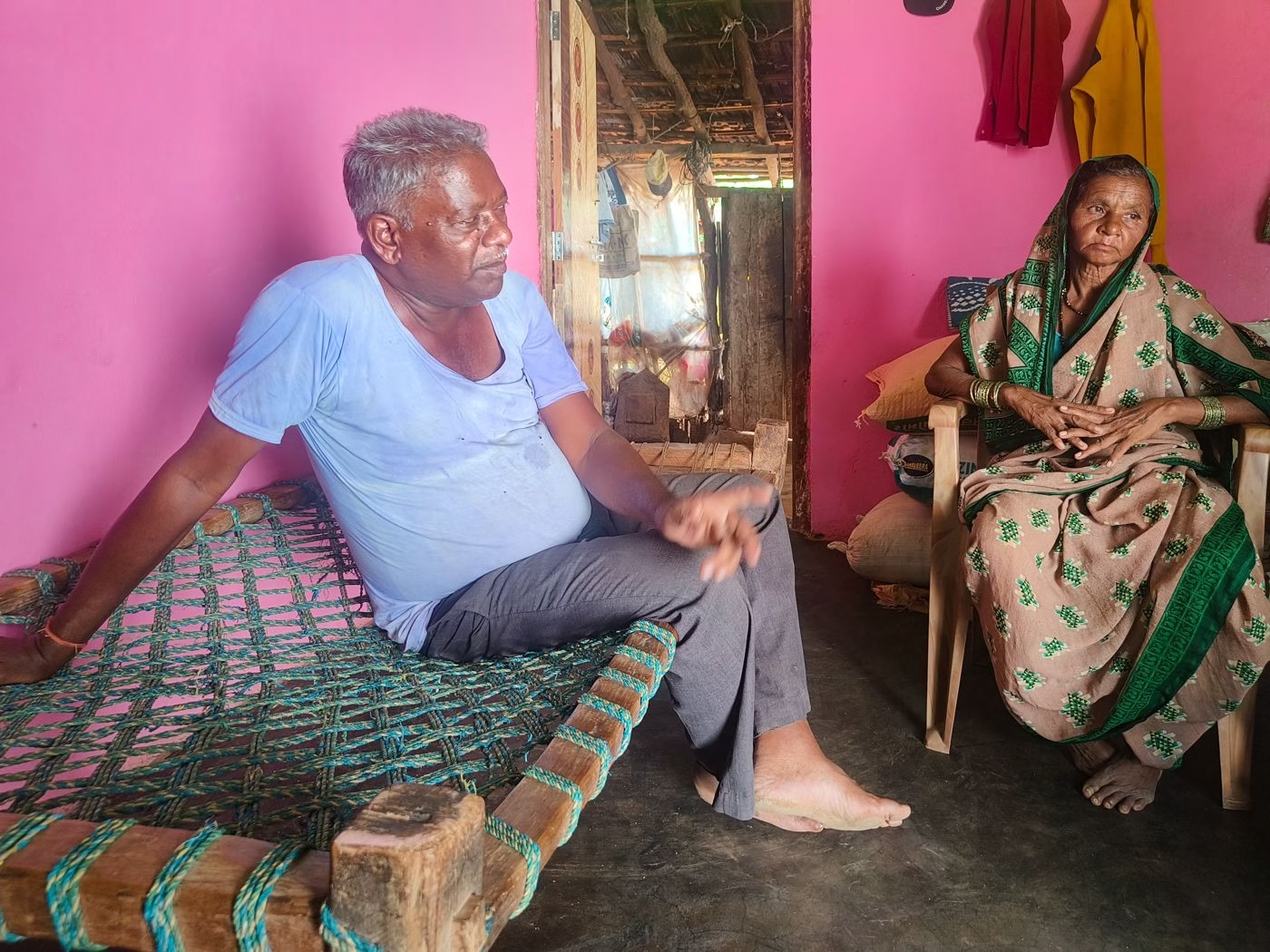 Hardikar
Vilas Jambhule explains the dire situation in the district with the reserve’s 120-125 tigers. Bacchala, the bereaved wife of tiger attack victim Vinayak Jambhule, listens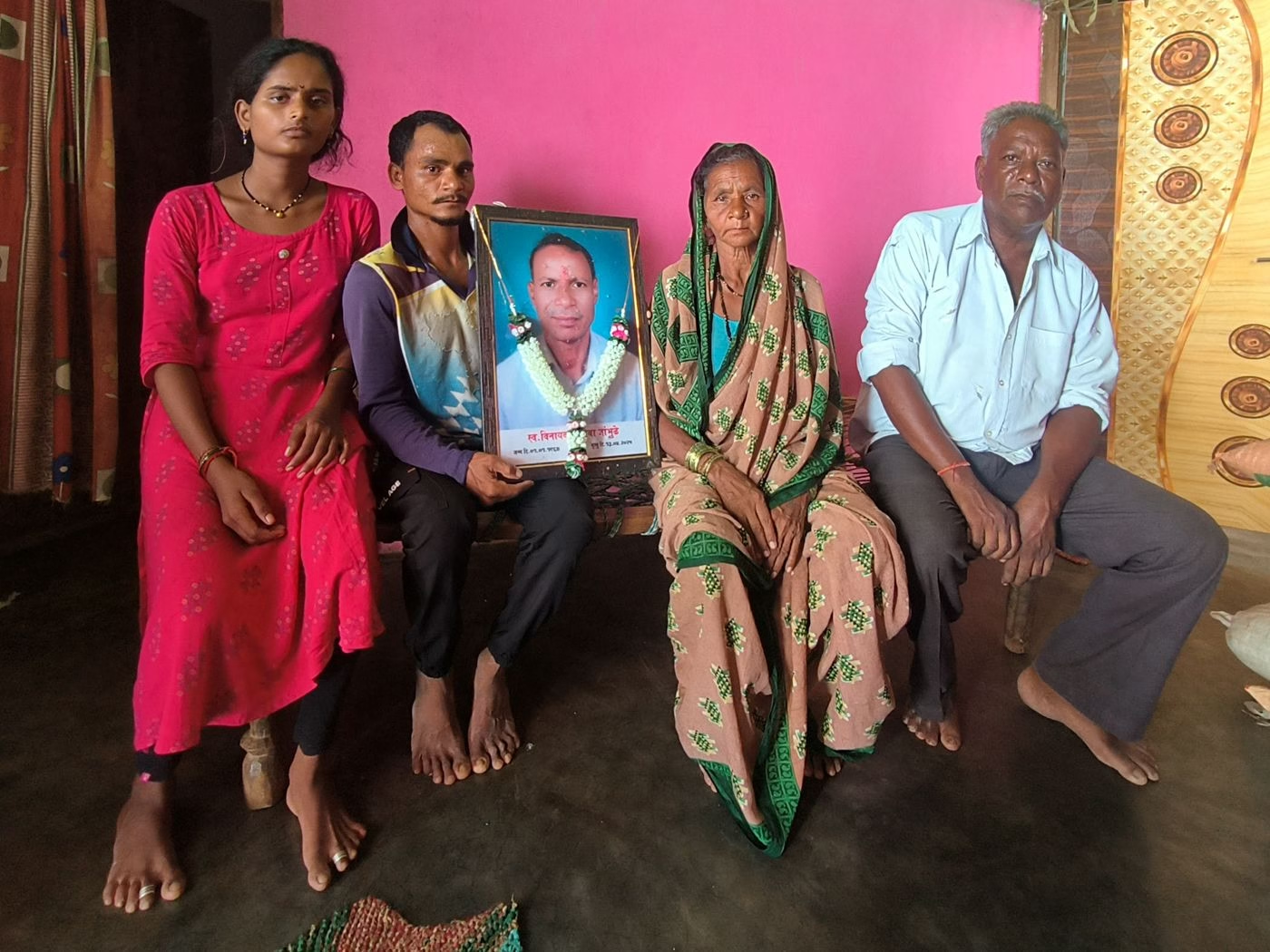 Hardikar
Vinayak Jambhule died in a tiger attack on April 13, 2025, in Chichkheda. He is is survived by his: daughter-in-law Vanita, son Ashish, wife Bacchala, and brother Vilas
The Jambhules belong to the Mana community, a Scheduled Tribe (ST), that dominates Chichkheda village. Most villagers are small and marginal farmers dependent on non-timber forest produce (NTFP) for their livelihood in the summer.
Jambhule’s death struck fear among other villagers: they stopped going to the forests for mahua and tendu, and the season ended then and there: Each family lost Rs. 25,000 this year, says Vilas. He too is facing financial losses because he wasn’t able to aggregate the produce and pass it on to the trader for a commission.
While cattle kills are routine, Chichkheda has also had two cases of tiger attack deaths in the past.
*****
Not very far from this village is Pathri, a small habitation in Chichkheda panchayat, where almost every family collects mahua and tendu in the March-April-May period. This year, several of them have foregone it. Last November, Chandrabhan Lokhande, 60, a Dalit farmer, lost his life to a tiger attack on a farm just two kilometres from his home.
“He went to feed our cattle in the afternoon,” recalls his daughter Maya, her mother Shantabai staring quietly at her husband’s framed photo hanging on the wall. “He was attacked there,” she says. “We could not go into the forest this year after what happened to us.” Every year, the family would earn Rs. 25,000 each from mahua and tendu collection. That’s quite a loss, she adds.
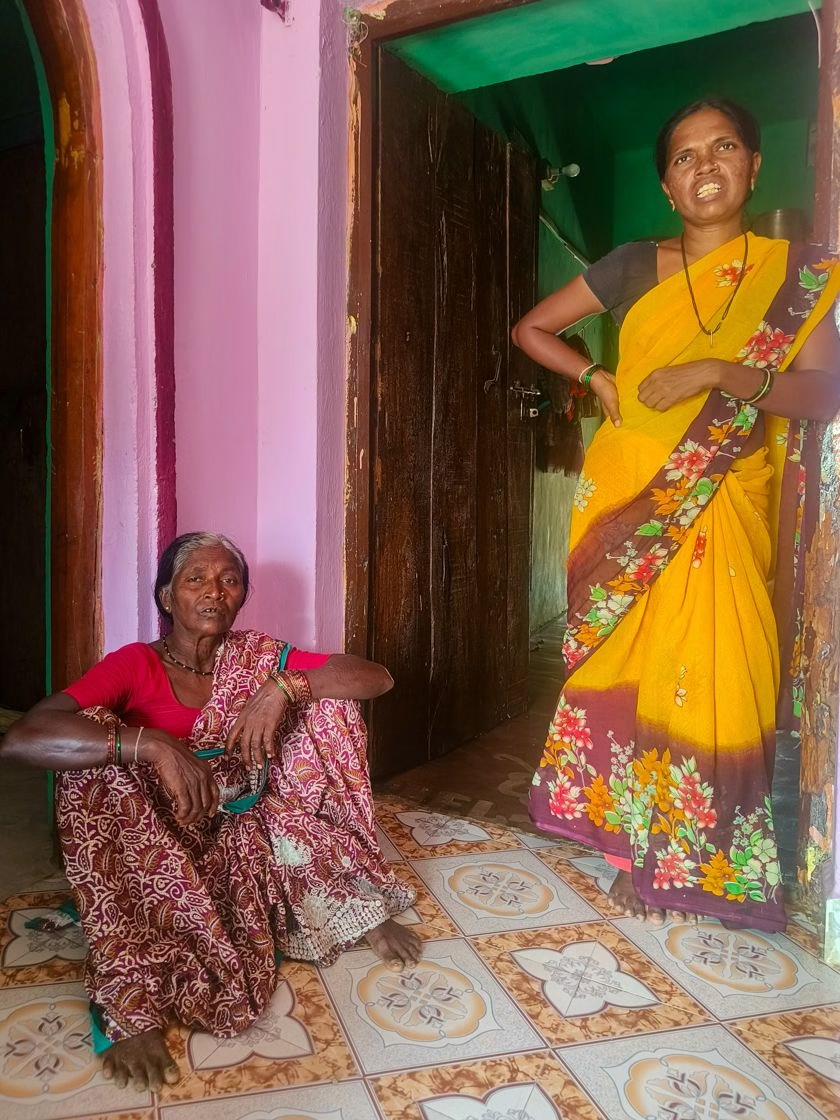
Lokhande’s widow, Shantabai and daughter Maya at their home in Pathri village. They have also had to forgo the livelihoods from mahua and tendu in the last season due to fear and bereavement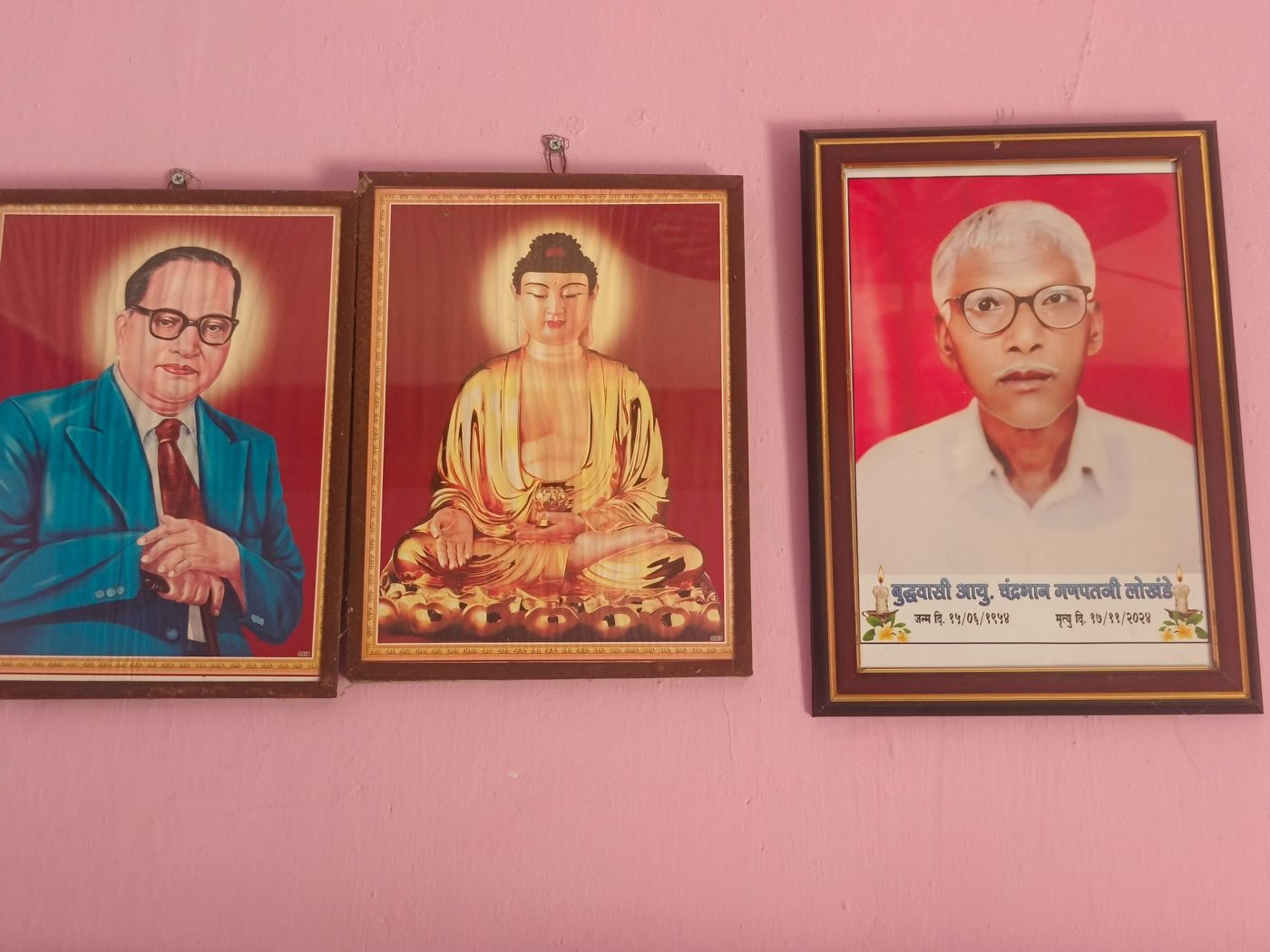 Hardikar
Chandrabhan Ganpat Lokhande, a farmer in Pathri village of Chandrapur was killed on his farm by a tiger on November 17, 2024; his photo hangs along the wall with B.R. Ambedkar and Buddha. The Lokhandes belong to the Mahar, Scheduled Caste community and are neo-Buddhists
The entire livelihood cycle is under stress in this region which borders the south and west of the Tadoba forests, explains Sudhakar Mahadore, a social worker from the nearby Medki village (listed as Mendaki in the Census 2011). He runs ‘Akshay Seva Sanstha’, an organisation focusing on forest rights and livelihoods.
The livelihood cycle is like this: People farm from July to September; then they migrate from September to December or up to March; those who have irrigation facilities return to the villages and grow the winter crop from December to mid-March; and from mid-March to mid-June they collect forest produce, including mahua and tendu. Most people grow only one paddy crop a year.
Now, their crops are under stress because of animal raids; and people live with the nagging fear of large carnivores – tigers and leopards – all through the year. “Like this year, because of frequent incidents of human deaths, many people have foregone their incomes by not going into the forests,” Mahadore says. That leads to people falling back upon private loans to prepare for the agriculture season. “Otherwise, summer incomes help them buy farm inputs.”
The fear has also impacted labour availability in these parts, Mahadore says. “Why will women or men undertake farm labour when they know it’s risky?” he asks. “The farms and forests are so closely linked that you never know if a tiger is lurking around any time in the year,” he says.
*****
Chandrapur district in Maharashtra’s eastern Vidarbha region is the epicentre of a bloody and intensifying human-tiger conflict. Close to 2,000 people have died in the past two decades in tiger or leopard attacks here, and many others have sustained grievous injuries in attacks by wild animals, according to the data shared by the office of the chief conservator of forests (territorial), Chandrapur district. Read: ‘It’s a new kind of drought’
As many as 175 people have died in tiger and leopard attacks since January 2021, the data shows.
Watch the video: Fear of the tiger: loss of life and crop in Chandrapur
Two major processes are shaping the conflagration. On the one hand, big infrastructure and development projects are fragmenting the forest corridors and, thus, the wildlife habitat; on the other, small and marginal peasants are experiencing serious economic desperation which is driving their increased reliance on forest-based livelihoods.
While summers intensify the conflict because it is then that human beings enter the tiger territories, farmers suffer phenomenally high crop and livestock losses all through the year because of raids by wild herbivores.
Mendha (Maal) village is located on the widened and newly laid Nagbhid-Sindewahi road, a few kilometres south of the TATR boundary and part of a major corridor for wild cats dispersing from the reserve. These two tehsils, coupled with Bramhapuri and Mul-Sawali, are the worst-affected tehsils in the district, with dense human habitation and farms interspersed with territorial forests that are Chandrapur’s hallmark. These tehsils are to the south and south-west of the TATR, and reasonably free from the encumbrances of the mega projects, which have largely restricted and imperilled the tiger and leopard dispersals to the west, north and even south-eastern parts.
A 2018 study by the Wildlife Institute of India broadly indicates that the Eastern Vidarbha forest landscape of Maharashtra that includes the TATR sub-landscape, is a series of fragmented forests with broken wild animal corridors. The territorial forests outside the reserved forest areas are shrinking in size and quality, primarily due to infrastructure projects, roads, and ever-growing human settlements, the report shows with the help of vivid maps.
The ecology of the district lies in tatters with devastating outcomes for the most vulnerable communities living around the forest areas, both protected and territorial, says Bandu Dhotre, an environmental and political activist and founder of the non-profit Eco-Pro. Dhotre has for years tracked the crisis and laments it is only going to accentuate.
 Urja
Urja
There are 54 tiger reserves in India, across more than 78,000 square kilometres (NTCA report in 2023)
A factor often ignored in the debates is the steady mushrooming of new mines across this landscape – particularly towards the TATR’s western parts, along what is called the Wardha valley.
A district replete with coal and other major minerals, including limestone and iron ore, Chandrapur has over 30 coal mines primarily operated by Western Coal-fields Limited (WCL) in the tehsils of Warora, Rajura, Ballarpur, and Ghuggus. Add to that the new privately-operated open cast mines, half-a-dozen cement factories, a sponge iron plant, washeries, ash dumps, and more. What you get is a recipe for ecological and economic disaster.
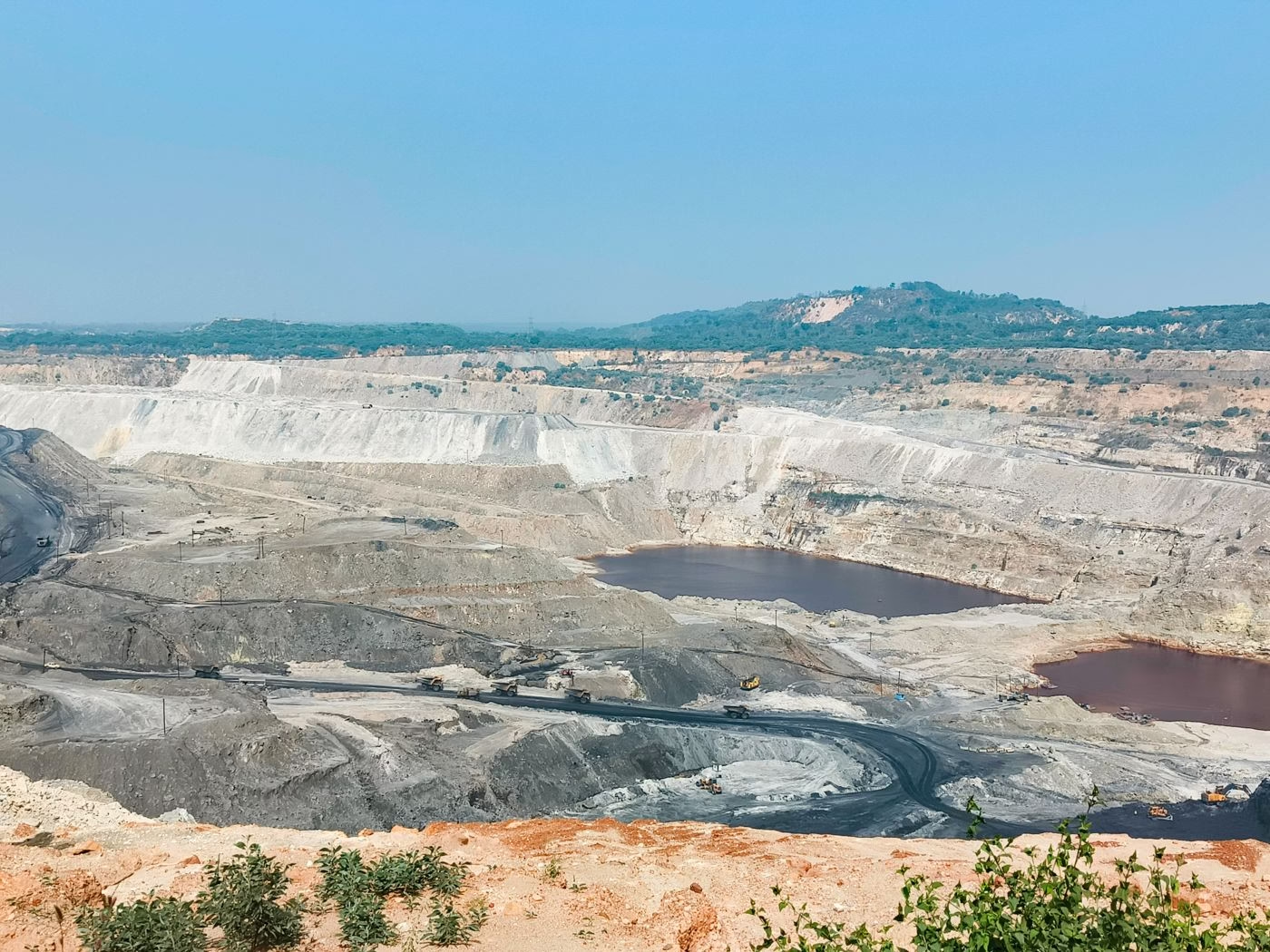
There are a series of new coal mines at Bhatadi village, on the south-western fringe of the TATR, barely miles from a village called Moharli that hosts the major entry point into the tiger reserve. More are pushing for environmental and forest clearances.
Bhatadi mines, operated by the Western Coalfields Limited (WCL), are a series of large craters that have overnight turned what was once a key tiger habitat into an oceanic well of dust and coal. Standing on the edge of the crater, you can see beyond, a panorama of Tadoba’s pristine flora.
 Jaideep Hardikar
The Bhatadi open cast mine and craters. Currently under operations close to the Tadoba Andhari Tiger Reserve
 Jaideep Hardikar
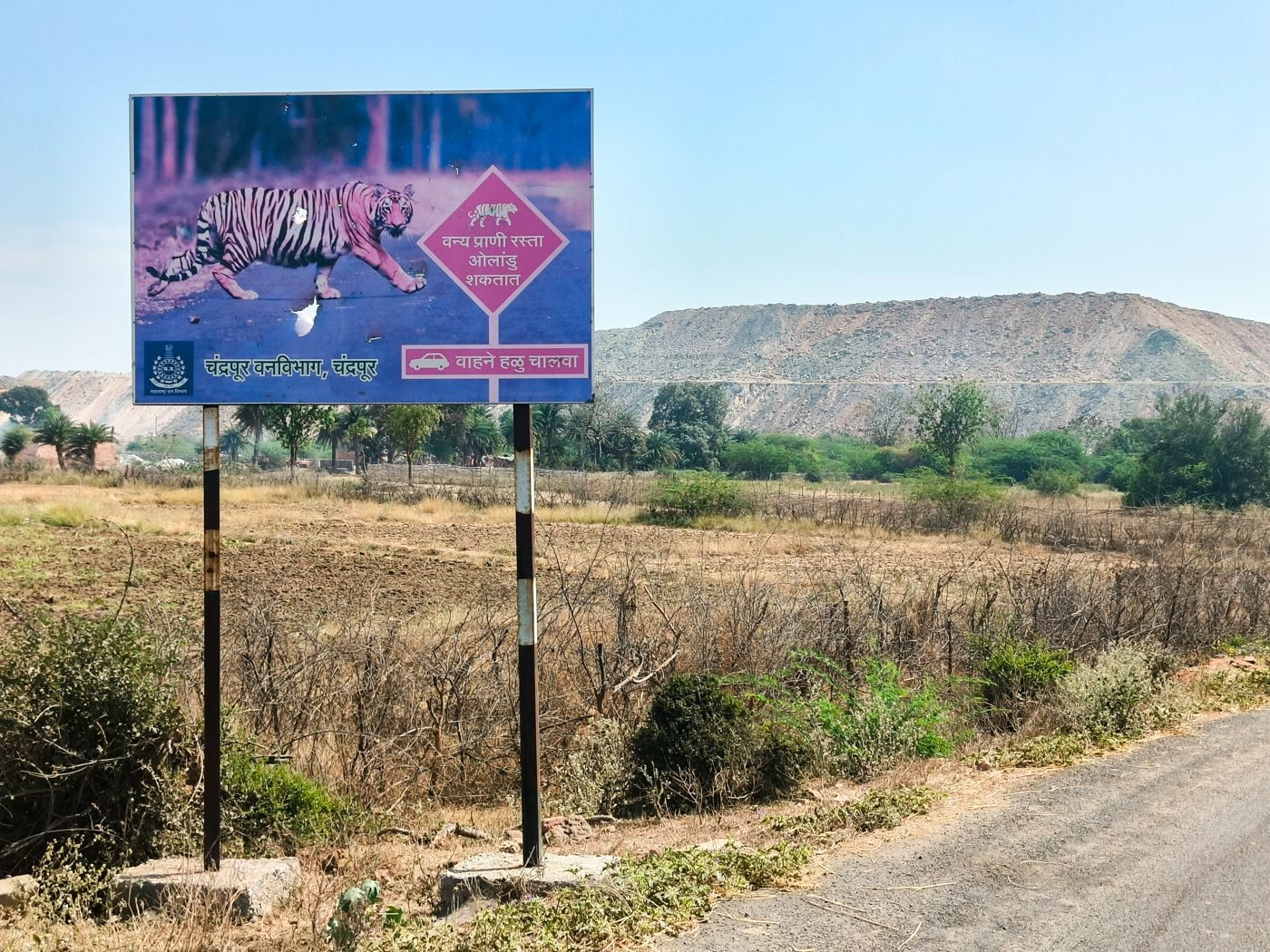
A board warns passersby of the tiger presence in the area – that was before the mines replaced dense forests
*****
This reporter grew up in Chandrapur; the mixed and deciduous forests that surrounded the town in the 1980s have disappeared into ever-growing crowded colonies of workers, overhead dumps on all sides, heavy truck traffic, and greasy red roads. You cannot help but notice that the trees lining the roads are covered in layers of red dust. Even the sprawling campus of the Chandrapur Super Thermal Power Station (CSTPS) – one of the largest in Maharashtra with an installed capacity of about 3,000 MW – is virtually a part of the city today, and it hosts several tigers within its compound, given that the thermal plant falls within the TATR landscape.
“It’s a mess,” says Dhotre. He is of the view that the recent changes are leading to several behavioural changes in the wild cats. “A generation of new tigers is being raised not in the wild forests, but in the midst of human habitations,” he says. “A jungle of concrete, coal, and dust.”
The roads all around this forest-rich district have been widened in such a way that the movement of not just the tigers and leopards but also their prey has been badly hindered. A large right-bank canal of the under-construction Gosekhurd irrigation project has done more damage to the landscape. Then, the conversion of the Chandrapur-Gondia narrow gauge railway into broad-gauge – the tracks pierce through dense forests and tiger habitats – has further hit wildlife movement. Several tigers have died under the trains on these tracks, Dhotre says.
Chandrapur’s tigers are adversely impacted by these developments — several wild cats, cubs, and leopards have had to be neutralised after being identified as problem animals or have died in train accidents. Meanwhile, mining and other companies are gaining ground in the area every day. Studies show it’s a pan-India management problem, mainly around the big tiger reserves.
 Jaideep Hardikar
Close to 2,000 people have died in the past two decades in tiger or leopard attacks in Chandrapur district
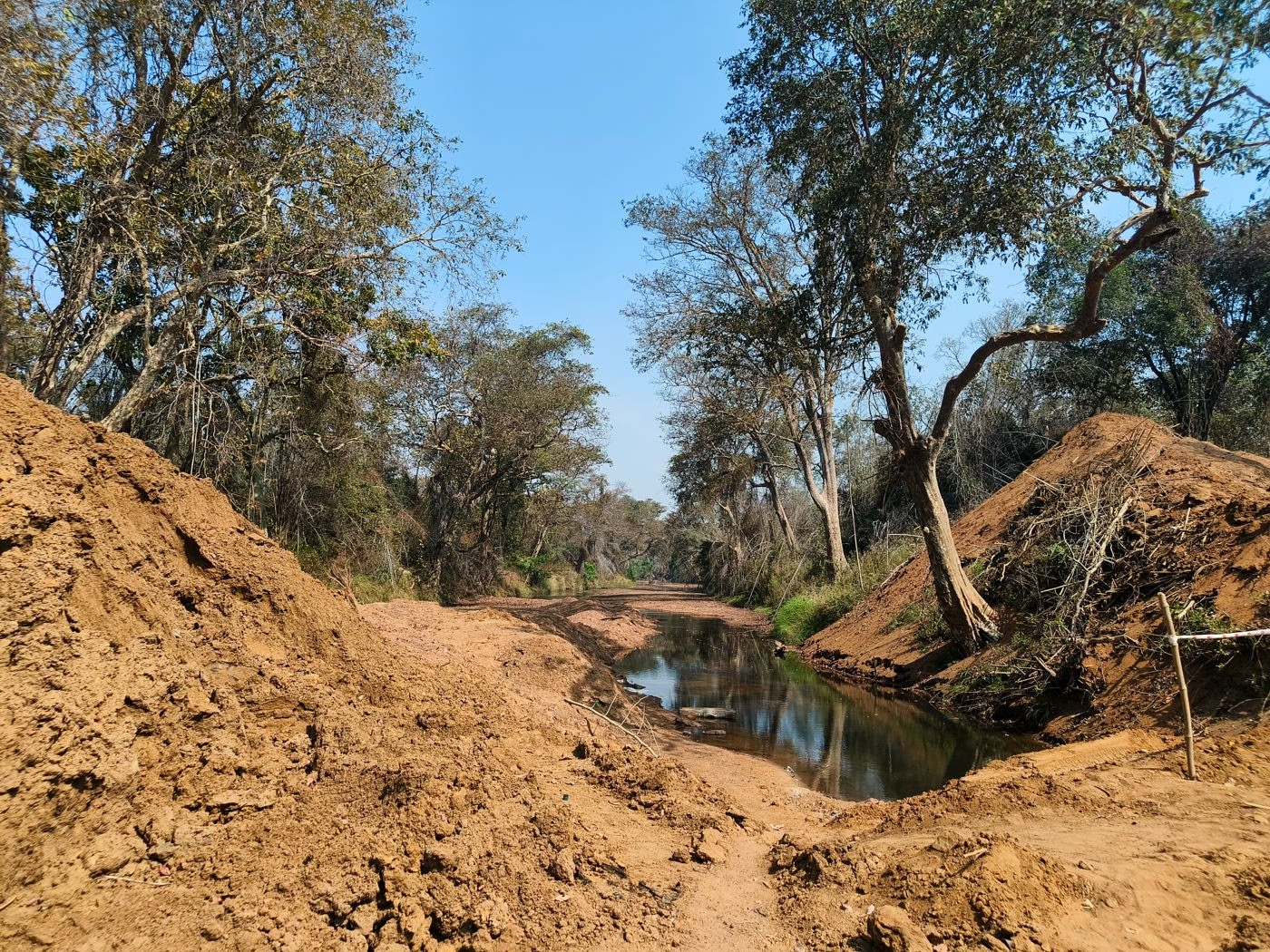 Jaideep Hardikar
As many as 175 people have died in tiger and leopard attacks since January 2021 here in Maharashtra’s eastern Vidarbha region
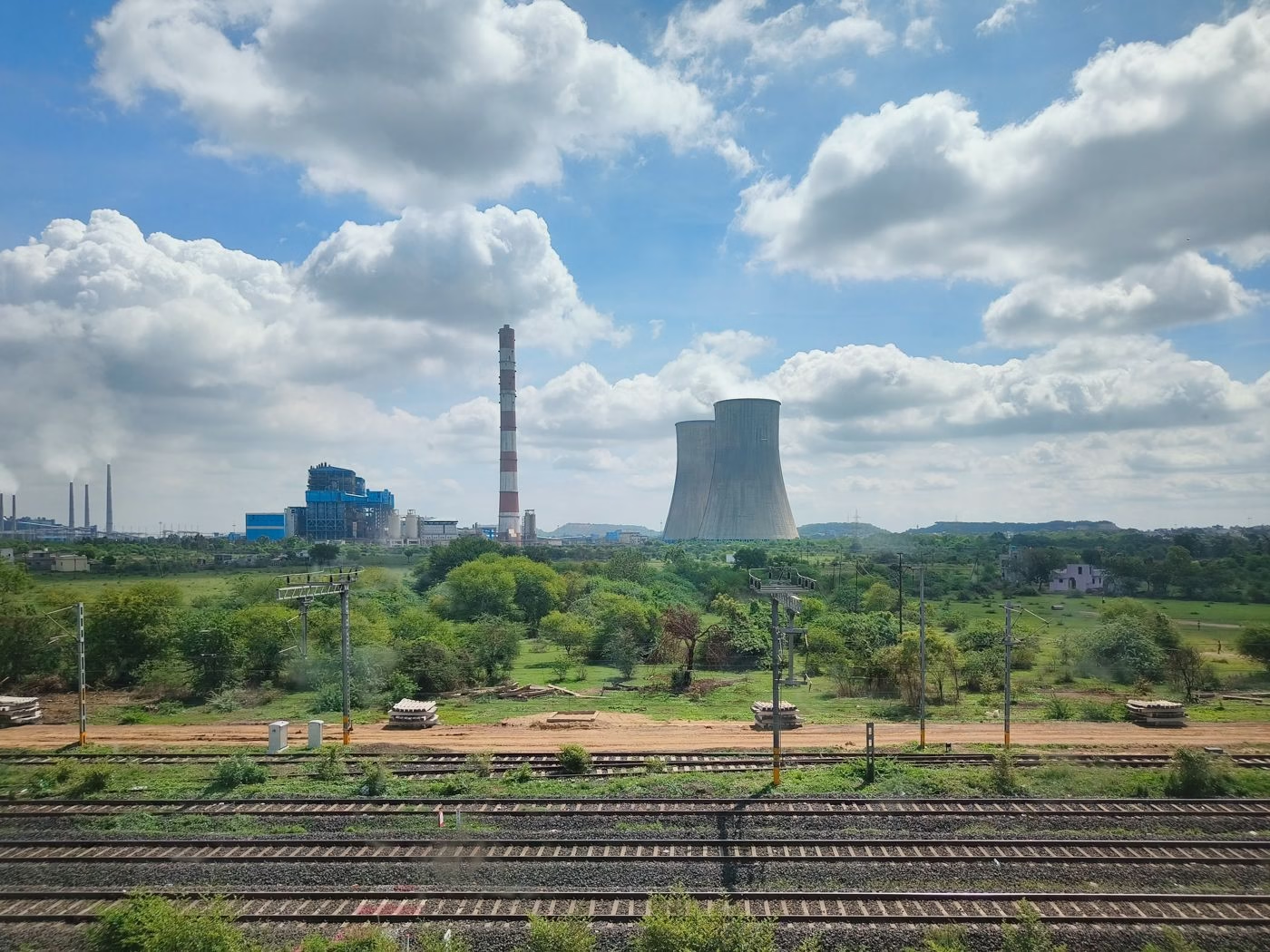 Jaideep Hardikar
Chandrapur Super Thermal Power Station, dotting the south-western areas of the TATR, has now become virtually a part of the Chandrapur city; its sprawling campus which has thickets of shrub forests is teeming with displaced tigers who have found a new home
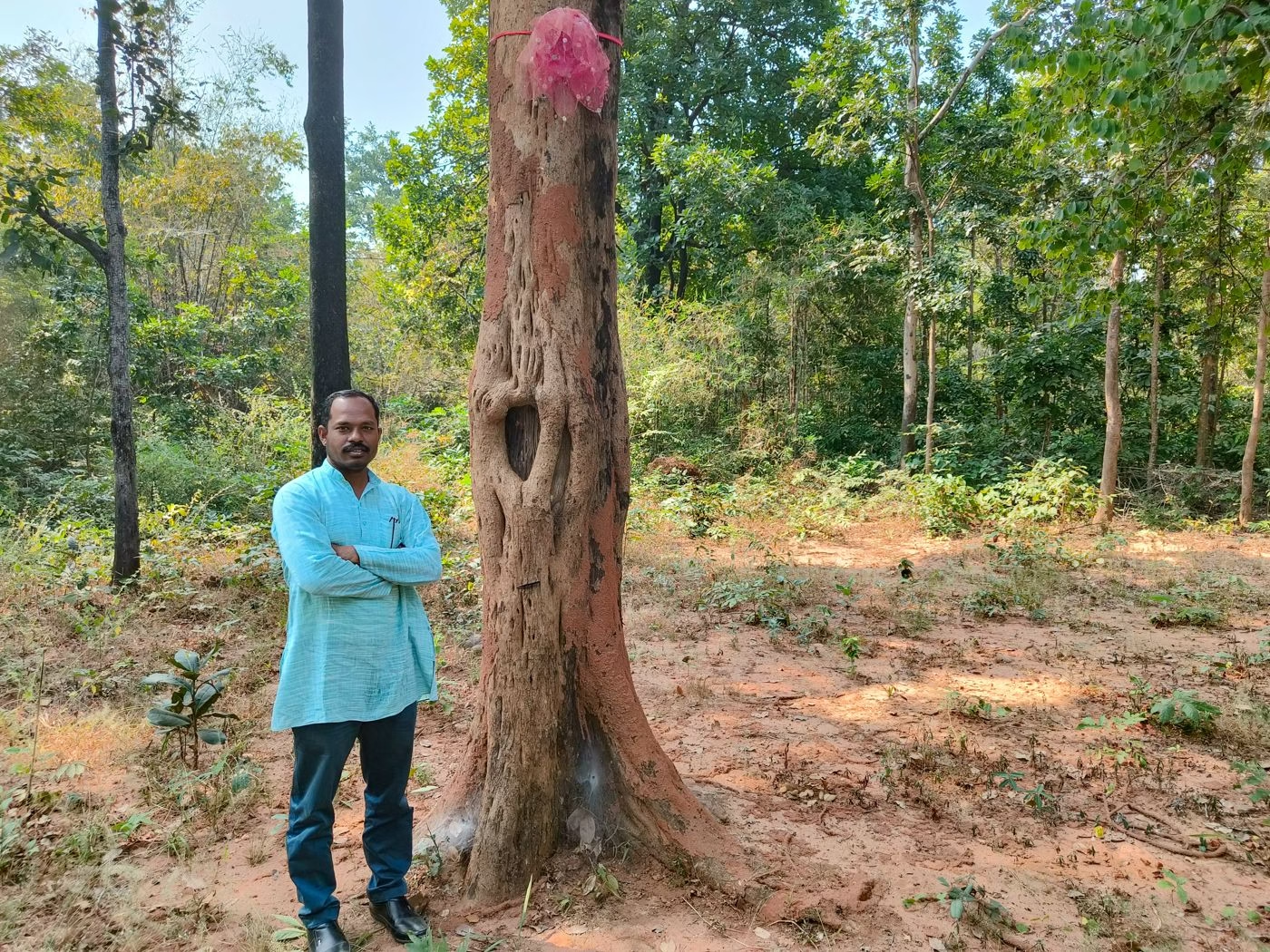 Jaideep Hardikar
Bandu Dhotre was instrumental in a long struggle against Adani mines which led to the cancellation of their lease. He managed to conserve a patch of forests in the TATR landscape. He is standing next to a tree where the local conservationists and ordinary citizens have tied a rakhi as a symbol of their victory
*****
“This is a continuation of an old problem,” says Jitendra Ramgaonkar, Chief Conservator of Forests (territorial), Chandrapur district. While the development or infrastructure imperative for people’s livelihoods can’t be ignored, he says, the key is to figure out how to strike a balance. “It’s a global dilemma.” Yet, he says, the figures of human deaths in animal attacks – tigers, leopards or other wild animals – are coming down following varied interventions, from providing cooking gas to families to reducing dependence on firewood and also solar fencing.
Chandrapur overall has some 250 tigers, including those inside the TATR, according to the department’s estimate – a spectacular number for this one sub-landscape. The territorial forests in the eastern parts (Bramhapuri, Nagbhid) and the southern parts (Sindewahi, Sawali or Mul) are teeming with tiger populations that are making the fragmenting forests their new home.
“Tiger population in the TATR is saturated,” Ramgaonkar says, and the big cats are dispersing into the territorial areas. Which makes this a vexed problem: on the one hand, you have a growing human population, and on the other, the rising numbers of wild cats and other carnivores. In the same area core and buffer – of about 1,102 sq kms.
“Most of these deaths have happened, even this year, inside the forests,” says Ramgaonkar. While it is easy to blame the department or the animal, he says, it’s a fact that these unhappy and avoidable accidents happen when people enter the forest breaking protocols.
One, they should never be going in small groups or in isolation; two, the department has been urging the people to avoid going early in the morning when large carnivores are active. “People knew there’s a tigress with three cubs in their vicinity,” Ramgaonkar says. “If they had avoided going in, particularly early morning, the accidents could have been averted.”
That said, economic desperation is growing across rural Maharashtra and this district is no exception. The human-tiger conflict only aggravates the distress. Frequent raids by herbivores such as wild boar, deer and nilgai disrupt the farming processes and impact crop yields round the year.
More than 35,000 rural families in the district – not just in the TATR sub-landscape – are engaged in mahua and tendu collection, he says.
 Jaideep Hardikar
Mahua is collected from mid-March to mid-June
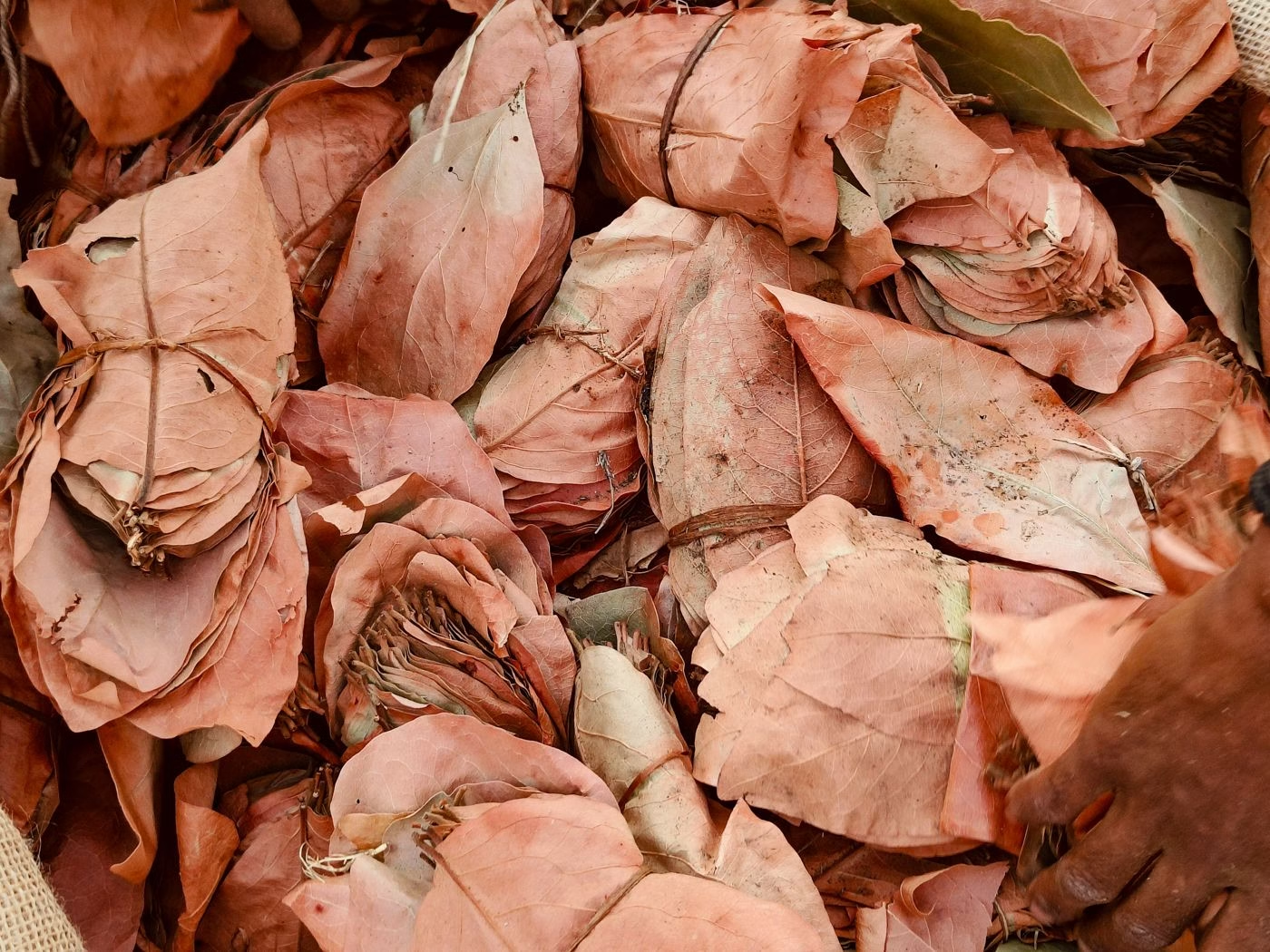 Jaideep Hardikar
Tendu leaves are wrapped into bunches and kept in the sun to dry
 Jaideep Hardikar
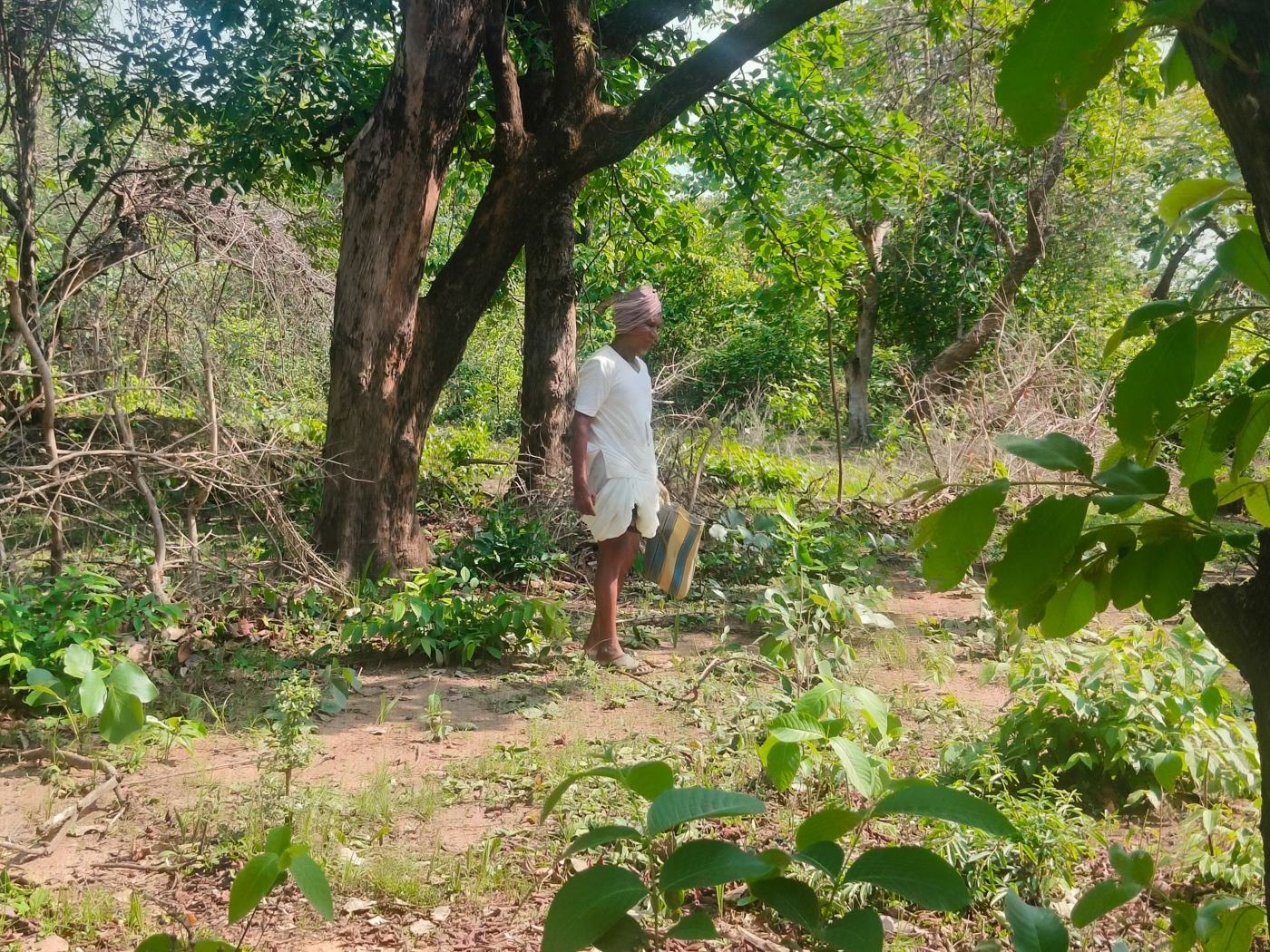
A Mana tribal villager of Chichkheda village and a marginal farmer, Rama Rushi Mankar is collecting the mahua seeds from the forest floor. These seeds are sold for the extraction of mahua oil. This year he could not collect flowers due to the death of a villager in the tiger attack, so now he’s collecting the seeds for some money
The department allocates territorial forest compartments to a contractor; the contractor hires local families to collect the leaves; then there are local aggregators or village-level traders in the supply chain. The risks are borne by the collectors, not the contractors. The overall business is worth hundreds of crores of rupees.
“People are not finding any meaningful employment in urban or rural Maharashtra,” says Neeraj Hatekar, economist and author of a recent book on the state’s rural poverty and deprivation. “So they are desperately dependent on anything that brings them income, including forest and natural resources extraction.” Even in the villages on the Western Ghats, he says, that reliance is growing.
“The economy [of Maharashtra] remains the largest among states, but faces rural stagnation, employment scarcity, and a stark disparity between rich and poor districts,” Hatekar wrote last year in Frontline magazine.
Chandrapur is not among the poorest districts of the state, but the income stagnation in rural parts, and distress among the peasantry is as bad, the study showed. The reason is although the district has a number of mines and heavy industries, large local populations are apparently not participants in either of them.
*****
Back in Mendha (Maal), the two bereaved families are preparing for a ritual. This reporter visited the village on June 14, 2025, a day before that. The villagers call it Waghai Devi Shanti – Waghai being the tigress goddess, who might be angry and needs to be pacified for the safety of humans.
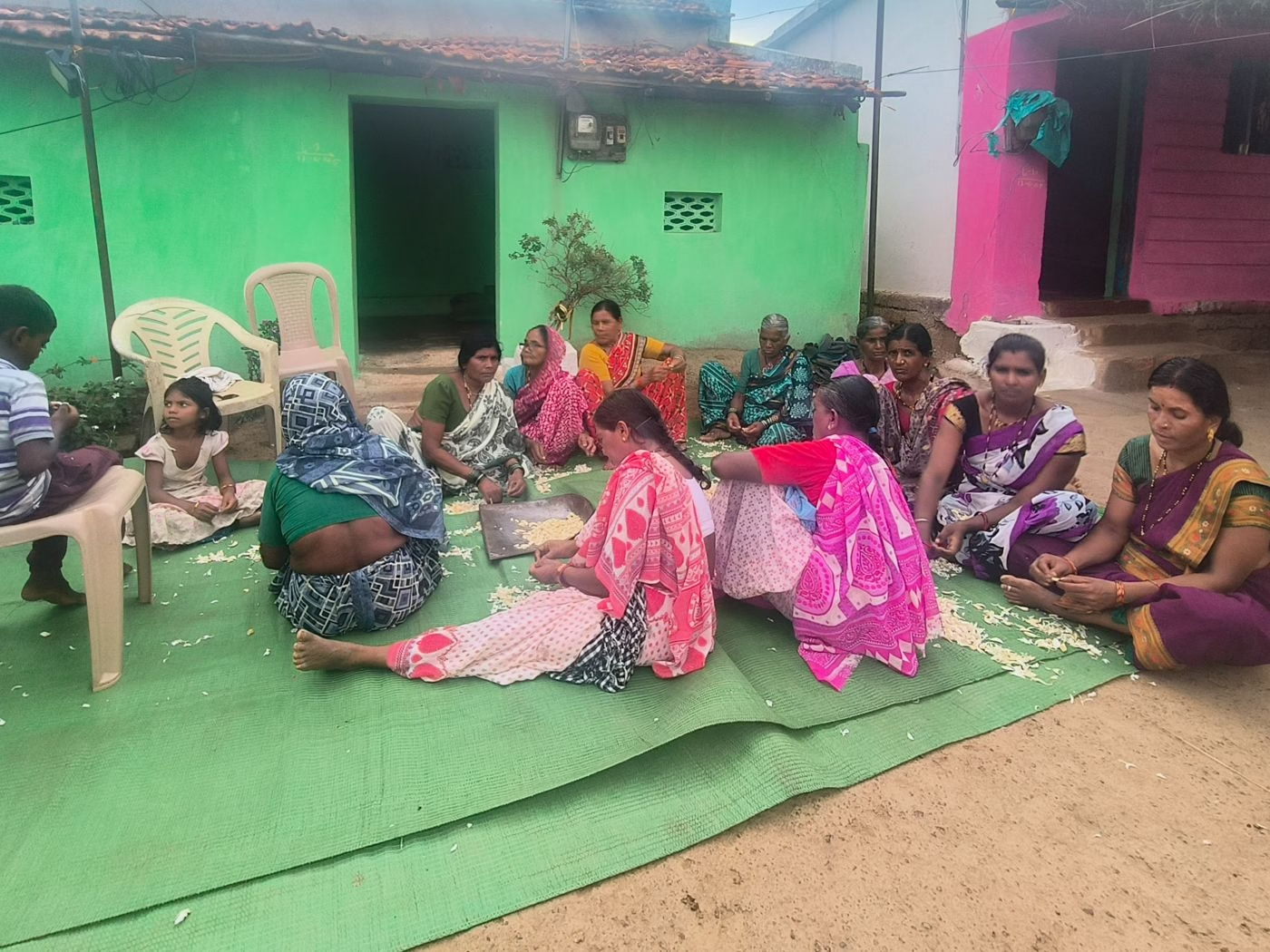
Neighbours and relatives are helping prepare a big meal for the entire village. Several women have split the labour – some are peeling and cutting the green vegetables, others are washing and cleaning the rice, a major local crop; still others are kneading the wheat dough to make the chapatis.
Jaideep Hardikar
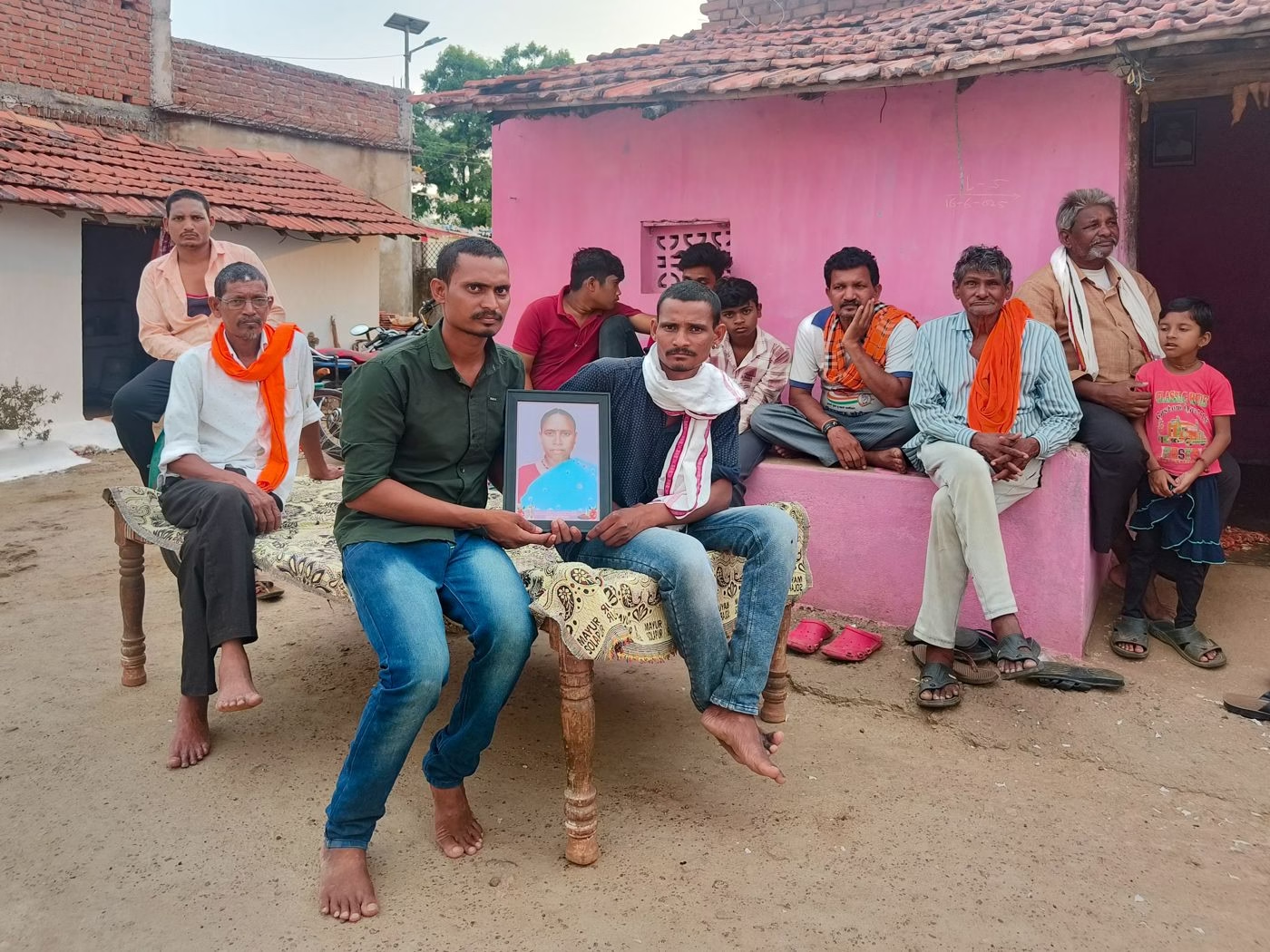
Sarika Shende’s two sons, Dheeraj (right) and Aatish (left), hold a photo of their late mother
 Jaideep Hardikar
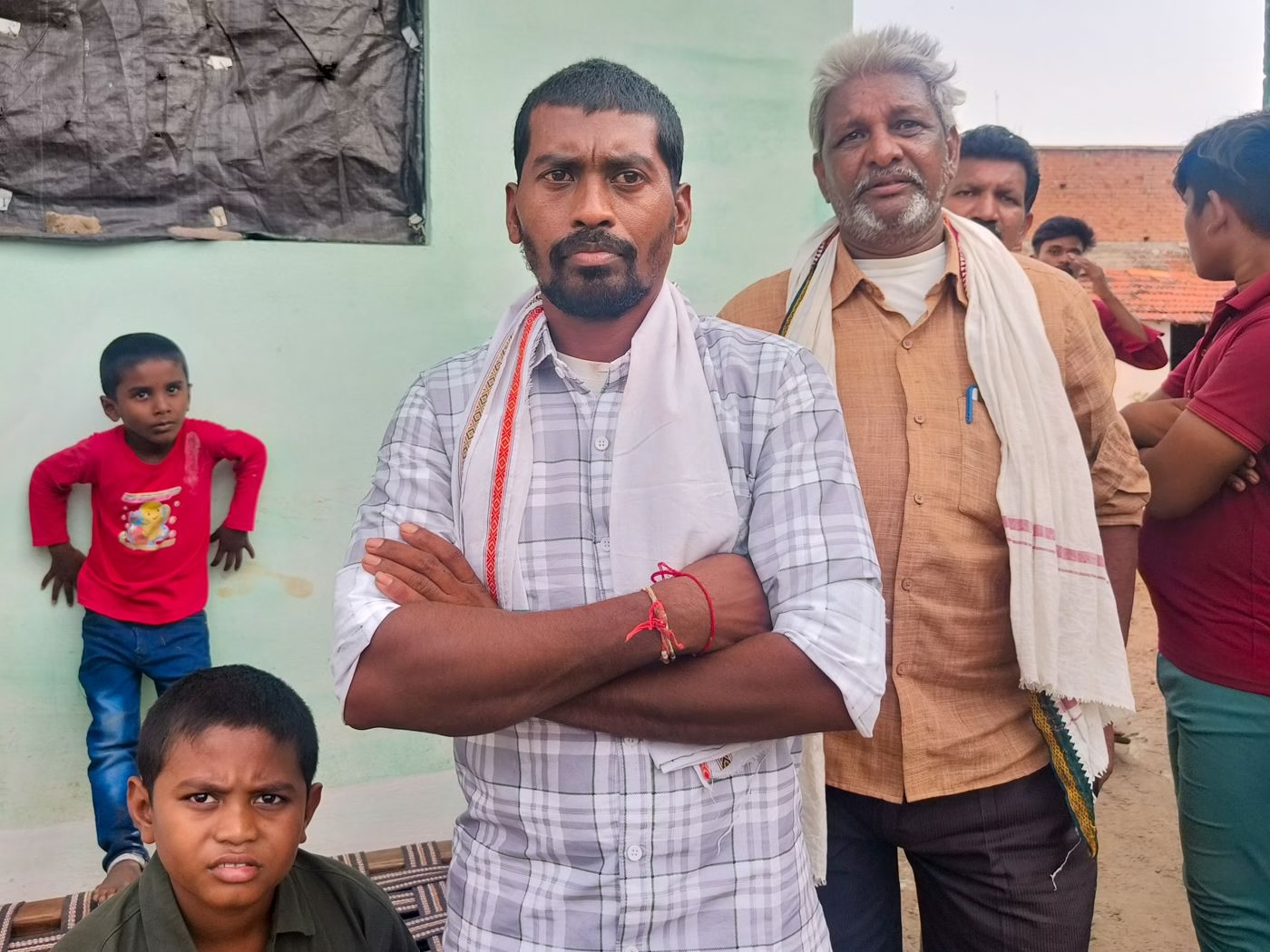
Manoj Chaudhari at his home a day before the Waghai Shanti puja
 Jaideep Hardikar
Relatives of the two grieving Shende and Chaudhari families preparing for the Waghai Shanti puja they are holding to pay their homage to the departed soul sand pacify the tigress a month after the tragic incident claimed the lives of three women in tiger attack
Jaideep Hardikar
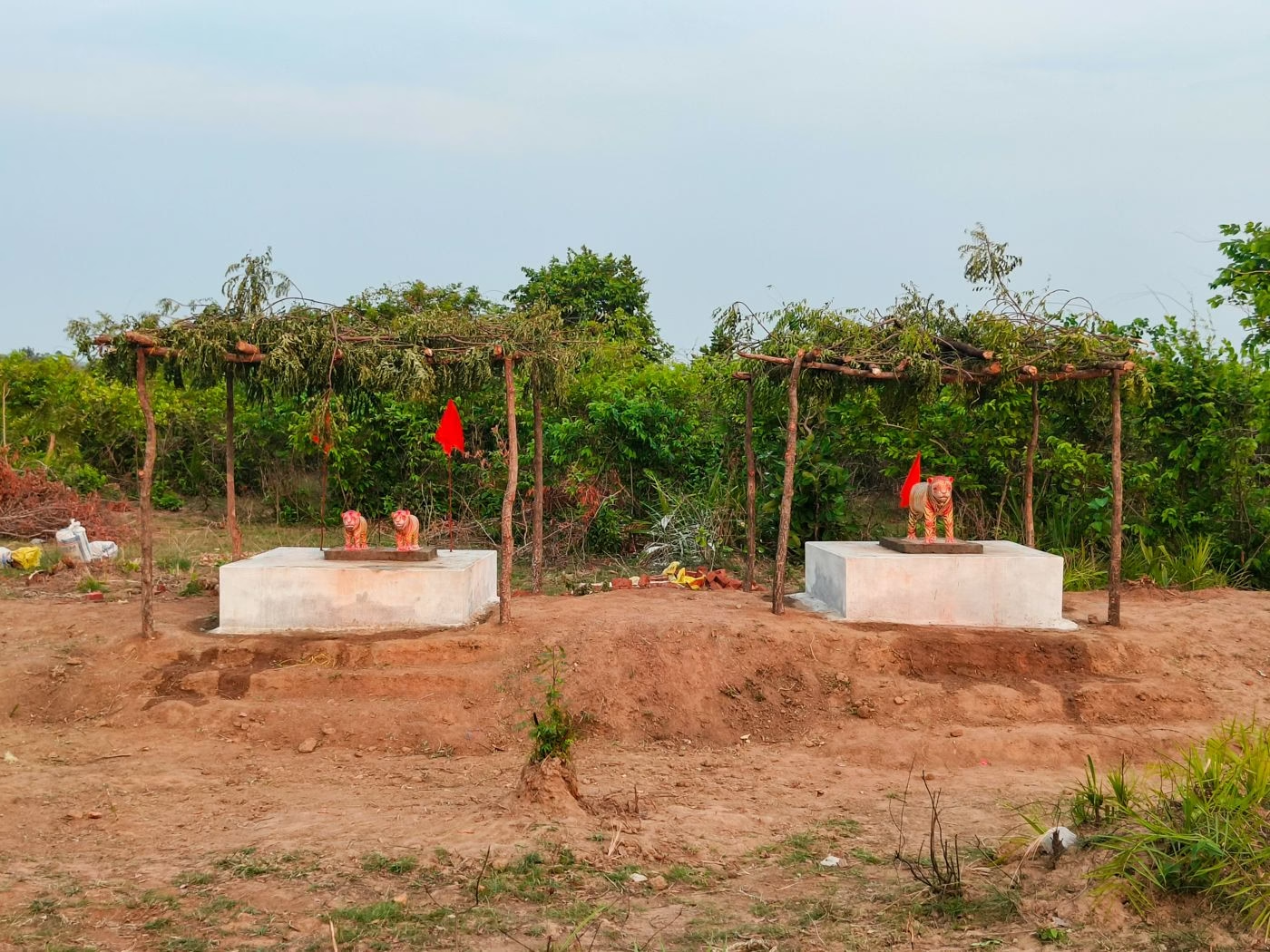
Newly built statues of Waghai Devi and tiger cubs have been erected on two separate pedestals on a patch of shrub forest along the Mendha (Maal)-Chargaon (Wadge) road as a belief that this will pacify the angry tigress and her cubs and reduce the conflict
This ritual is different from the 13-day shraddha puja, Kantabai tells PARI as she makes round balls of the wheat dough, squatting in the open front yard of the mourning Shende household. “It’s for the shanti [pacifying] of the Waghai devi [goddess] so that she does not hurt anyone again,” she says. And to pay homage to the departed women, she adds.
Barely a kilometre away, the villagers have pooled money to erect statues of a tigress and her cubs on two different cement pedestals in the middle of a shrub forest patch connecting Mendha (Maal) and Chargaon (Wadge) villages, which are two kilometres apart. It’s an ode to the big cat, despite it being the aggressor. Chandrapur has many such Waghai temples all over, local folklore being that if a tigress is angry and has hurt a human being, you need to do a puja to pacify her.
Mendha (Maal) had not needed one until now.
*****
Amidst all this turmoil, there’s the rare story of an escape too.
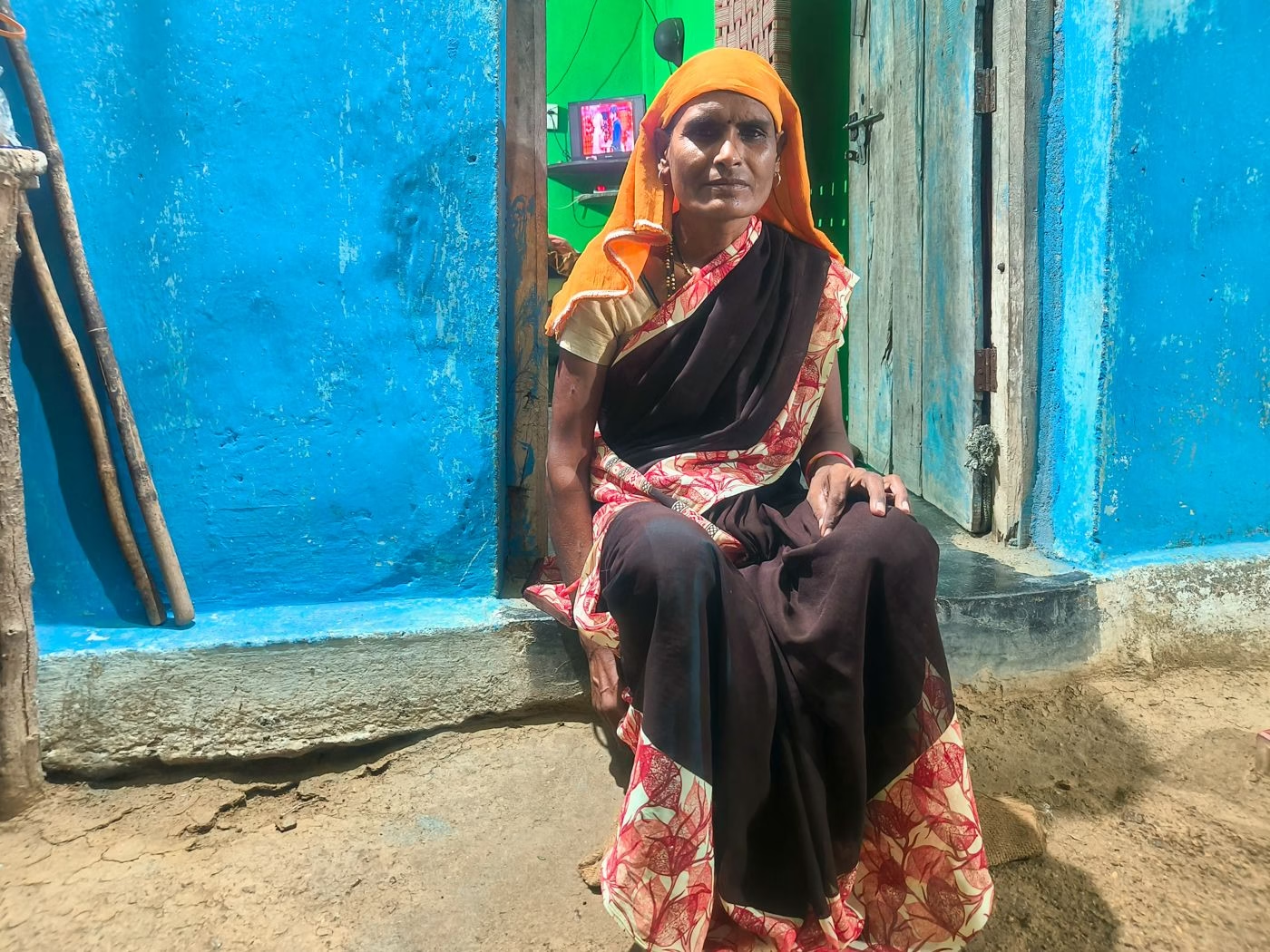
On the day the three women in Mendha (Maal) were killed, and around the same time, farmer Vandana Vinayak Gajbhiye was attacked by a tiger when she went to collect tendu leaves in the contiguous forest belt neighbouring Chargaon (Wadge) village. Miraculously, she survived.
“It was a male tiger,” says Vandana, 50, vividly remembering the few moments that separated her from death. “It was thanks to the other women in my group, who began shouting and making loud noises immediately after they realised that I had fallen on my face after the tiger had attacked me from behind,” she recalls. “That scared the animal; it dropped me and retreated into the forests.”
The time was about 7:30-8 a.m.
Jaideep Hardikar
Vandana Vinayak Gajbhiye, survived a tiger attack on May 10, 2025. Seen here at her maternal home in Motegaon village near Chimur town in Chandrapur district
Once the tiger had backed off, Vandana summoned all her courage and stood up, even though grievously injured and bleeding profusely, and trudged towards the group of women who stood some distance away, shell-shocked. “I sat there for some time, before we walked back home,” she says.
Vandana fainted upon reaching home and had to be rushed to the Sindewahi government hospital, where she was stitched up, given injections, and tended for three days before being discharged. She has continued to be treated and takes injections against an infection every week since. More are to be administered, she says.
She moved to her brother’s home at Motegaon in Chimur tehsil, some 30 km from Sindewahi, to recuperate. “I won’t ever go back to collect tendu leaves,” she declares, recovering at her maternal home, walking with a stick.
Her head wrapped in a soft yellow cloth, Vandana says she received 40 stitches to her scalp lacerated in the tiger attack. “It could not hold me by my neck,” she says, even as she wonders how she survived.