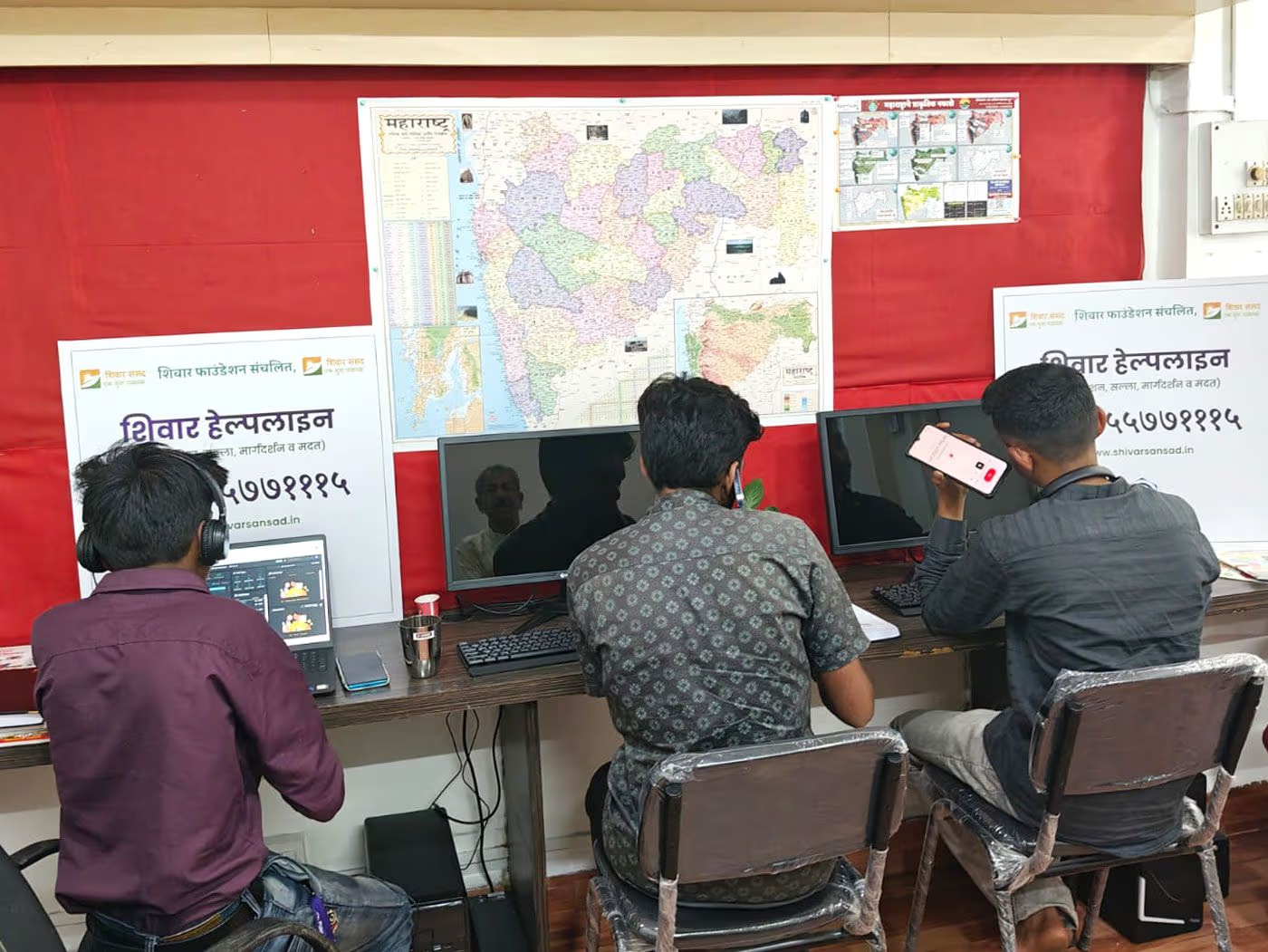
As his cell phone starts buzzing, 20-year-old Kirit quickly settles before a desktop, slides on his headphones, picks up a pen, and flips open his diary.
“Namaskar, Shivar Helpline,” he says, in a quiet and steady voice.
On the other end is a middle-aged woman-farmer, Parvati from a village in Maharashtra’s Nanded district.
“How may I help you?” asks Kirit, speaking in Marathi. A third year BA Psychology student of a college in Pune, he is originally from a village in Parbhani.
Paravti hesitates. Her voice trembles.
“Rains destroyed all our crops,” she manages to say. “Soybean, tur…the goats are gone too. There’s no work now.” The family’s stable fallback – farming, livestock, seasonal labour – has disappeared under water. Loans remain unpaid; hope has drowned. She asks if he can provide green-gram seeds for the upcoming rabi season.
“If we get seeds, we will at least be able to see through the summer,” she reasons.
Jaideep Hardikar
Shivar Helpline answers calls come from across Maharashtra’s rain-shattered countryside and beyond. Young psychology students attend calls
As a helpline intern, Kirit has been hearing similar stories almost every day for the past two months. He diligently notes down her needs, asks about her family and village community, and tells her he will convey her family’s requirements to the head of the helpline where he’s currently interning in November 2025
“Kahi tari jarur hoil, kalji karu naka [Something will surely work out, don’t you worry],” he tells her gently. The caller profusely thanks the young man, but before she hangs up the phone, she pleads: ‘ya bahini kade laksha theva dada [Keep this sister in your thoughts, brother].”
“Kalji ghya [take care],” he tells her.
The conversation that started at noon, ends in 10 minutes. The pain continues, on both sides.
“We are learning hands-on,” says Kirit. Their own homes are in no different situation and so they know and can relate to the callers’ precarity.
The quiet two-room office of Shivar Helpline – a non-profit Shivar Foundation-run farmers’ helpline – is located on the fourth floor of a cramped commercial block in Pune’s Kothrud area. Outside noisy traffic sounds ebb and swell. Another call comes in to 8955771115. And another after that. Kirit slides his headphones back and braces for the next cry.
*****
An exceptionally heavy monsoon in the last two months has made Shivar Helpline a tenuous hope in the collapsing world of farmers. On most days, this helpline handles two dozen calls; some calls stretch longer than an hour.
 Jaideep Hardikar
Between September 20 and 28, 2025, powerful weather currents unleashed rain over Marathwada and western Maharashtra
 Jaideep Hardikar
Calls to the helpline describe losses in farming, livestock and seasonal labour which have disappeared under water; loans remain unpaid
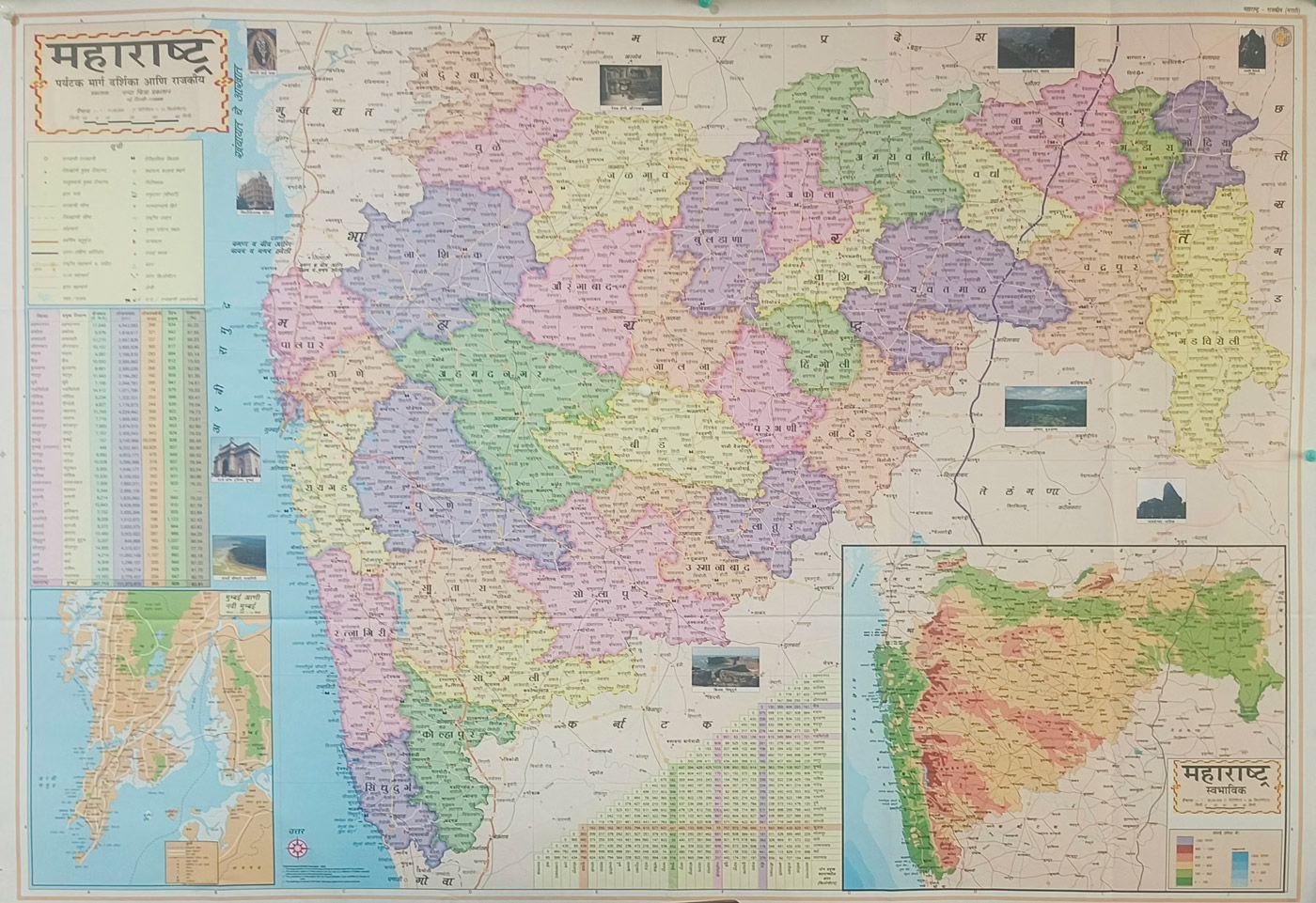
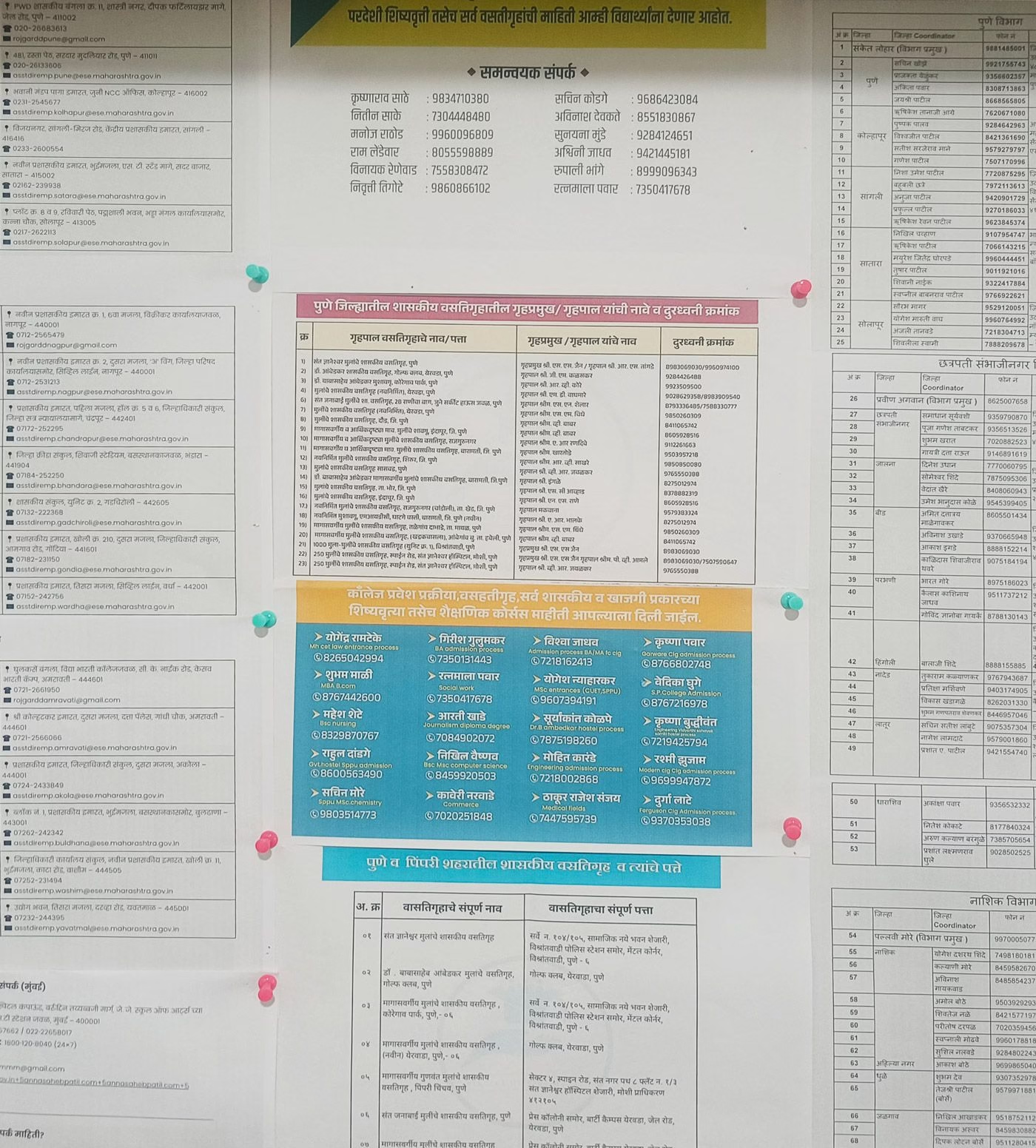
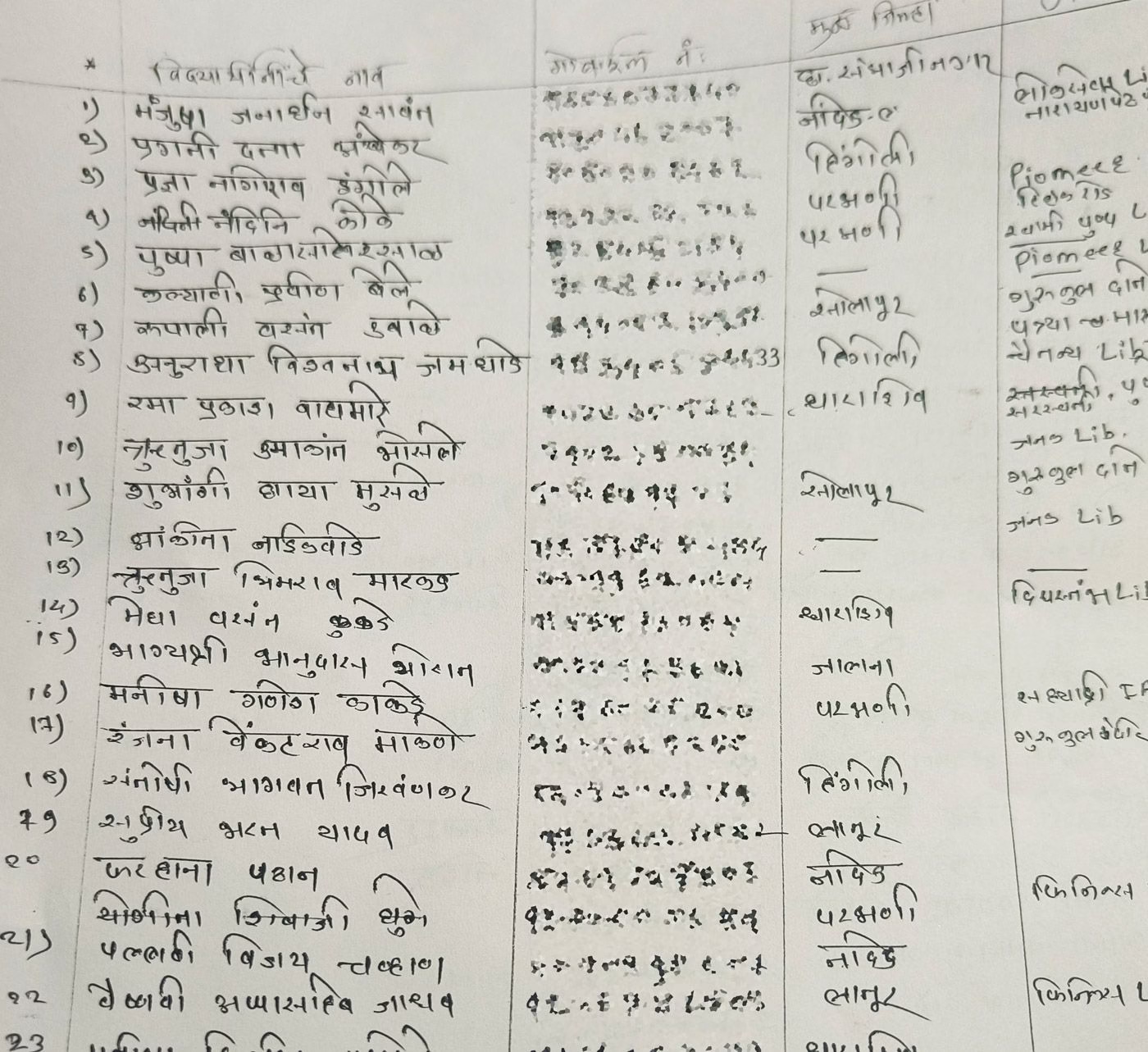
A map of Maharashtra, posters of the helpline, notes and documents hang on the office walls, a reminder to the interns of the context to the cries. This helpline runs on scarce resources, but boundless empathy. It’s largely due to the word-of-mouth publicity and social media that its numbers have spread, far and wide.
The calls come from across Maharashtra’s rain-shattered countryside and beyond: small-holder farmers, women and children, students from villages studying in cities but tied by ancestral land debts, labourers with nothing to look forward to. Nearly every caller has the same story: loss, debt, humiliation, anxiety, fear. Most callers have tried in vain to reach out to government officials or political leaders. The team prioritises those who have suicidal thoughts.
By 2 p.m., other interns and counsellors arrive in the office and take their seats before desktops.
The team is made up of young paid interns, mostly from farming backgrounds, studying psychology as their major, like Kirit, or his 21-year-old colleague Suresh from a village in Jalna, or Girish who is from rural Gadchiroli.
“Most callers are reluctant to seek help,” Kirit says, talking to PARI between calls. “They think it is undignified, but when they run out of options, they call us.”
The next one is from a distressed young girl from a village in Nanded, studying in Pune.
“I share a room with 10-12 friends in Pune…but I don’t have any money to pay the rent, to buy tiffin; none of us have money; my parents have nothing left to send, rains destroyed everything.”
She begs for financial support for a month – to pay rent and for food.
 Jaideep Hardikar
The walls of the helpline office display maps, frequently asked questions, important numbers and more
Jaideep Hardikar
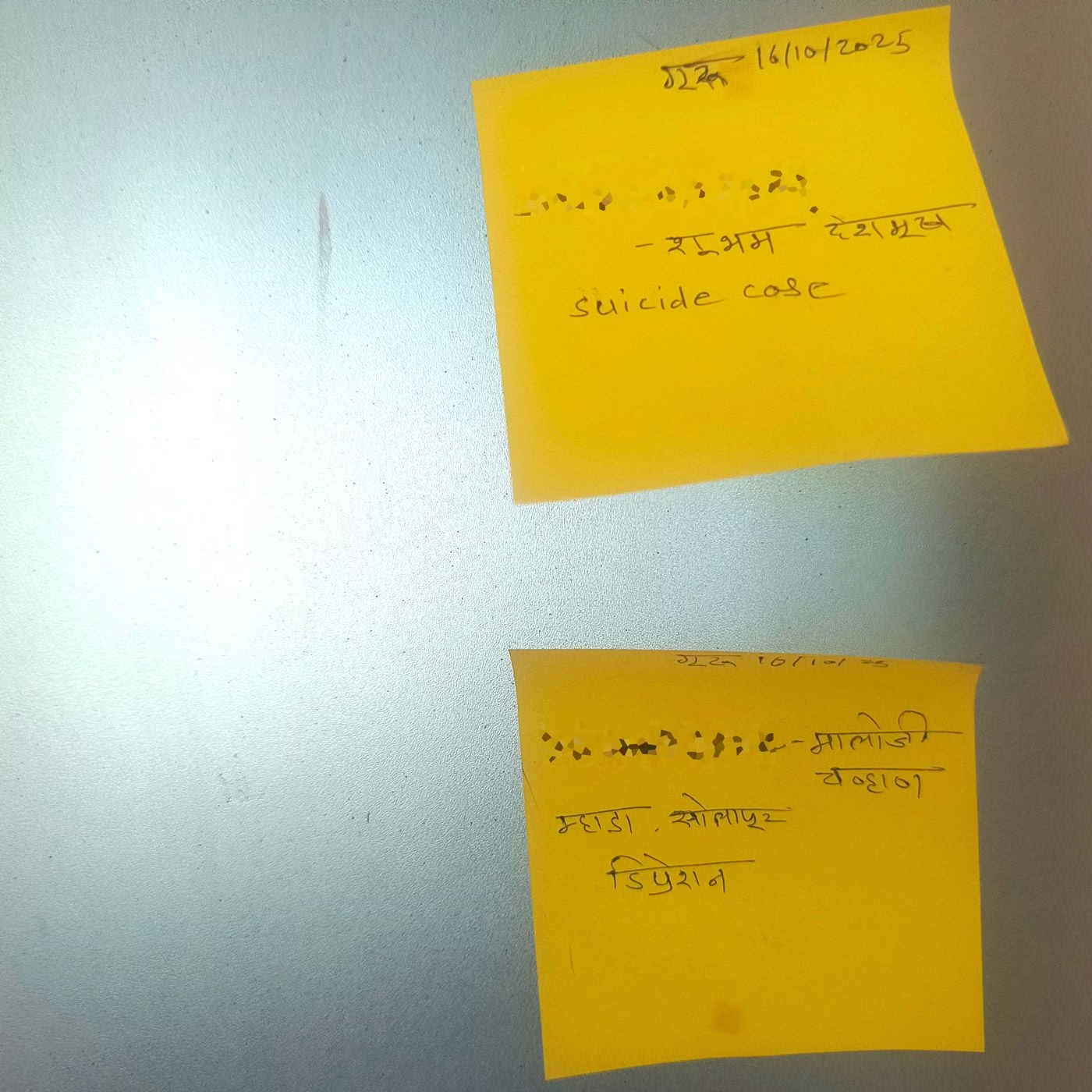
Yellow-chits on the wall mark priority work, including the names of callers considering self-harm
Her name will soon enter a separate list that the helpline manages – mainly of young men and women in universities in Pune who are from the Maharashtra countryside, and now in dire need of immediate rental, food and financial support.
Another caller is a shepherd in Dharashiv whose goats – his only source of livelihood – were swept away in floods; he is shattered, his livelihood gone. He is weighed down by his fear.
The helpline’s dashboard data for September 23 to October 23, 2025, tells a grim story: Close to 10,000 calls were recorded, and attended to, by the helpline. Shivar had to recruit more volunteers during that period to manage the rush. On the worst day – 894 calls. Among those, at least 180 people were contemplating serious self-harm.
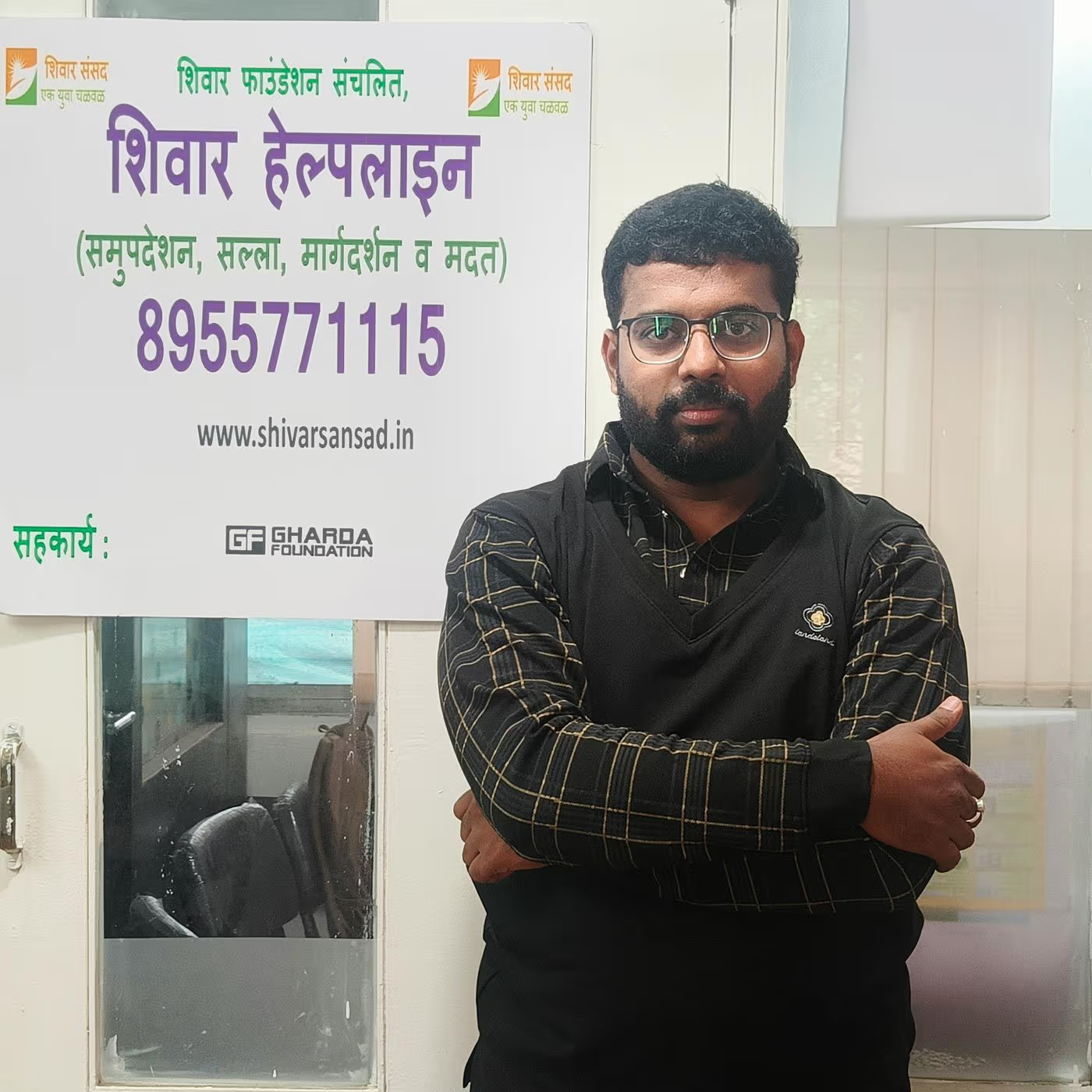
“We just crumbled under the calls,” recalls Vinayak Hegana. The 31-year-old is the founder and CEO of Shivar. A trained psychologist and social-worker, he is an itinerant observer of rural distress.
 Jaideep Hardikar
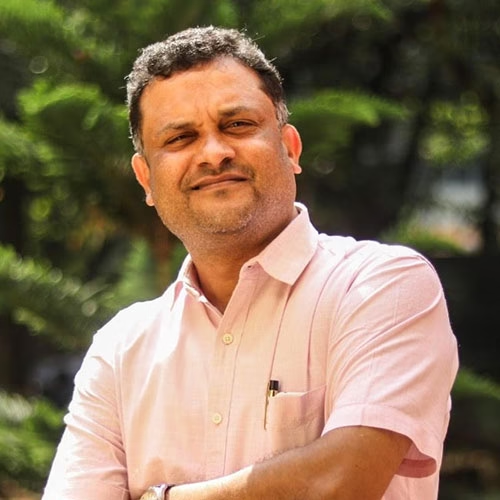
Vinayak Hegana is from a village in Kolhapur district. The CEO and founder of the Shivar Helpline, he is an agriculturist and a trained psychologist
The number of calls did not shake Hegana and his team of motivated youth. What shook them was the magnitude of distress wrought by the recent climate aberrations, compounded by human follies and non-existent and grossly unprepared government institutions.
“The calls tell us a sorry state of people all over Maharashtra,” Hegana, a 2023 Chevening Fellow, tells PARI at the helpline office, intermittently attending to the calls and passing instructions to his motivated team. “The crisis runs deep.”
For nearly three decades, Maharashtra – particularly Vidarbha and Marathwada regions, have been in the throes of a deepening agrarian distress. It’s fallout has been the continuing saga of farmers’ suicides — over 60,000 since the National Crime Records Bureau (NCRB) started keeping a log with its annual Accidental Deaths and Suicides in India (ADSI) reports. This year’s flash floods following extreme rainfall events and widespread destruction of crops in large parts of the state is only the latest in a series of challenges facing the peasantry.
“Climate disaster is not just an economic crisis,” Hegana says, “it’s also a mental-health epidemic.”
*****
In the midst of lashing rain on September 24, 2025, Laxman Gavsane, 42, made the last call to his wife Shivkanya from a nearby town where he had gone to buy groceries.
A marginal farmer, he doubled up as a labourer and did any work he could get. His dream was to educate his daughter Vaishnavi and son Shivshankar. Vaishnavii is in the final year of her diploma in pharmacy in Solapur district’s Barshi town. Shivshankar is in the second year of his diploma in technical education in Dharashiv.
After the call, Gavsane did not return. The following morning as rain continued to pour down, he was found dead in a farm along the village road, his body drenched, his grocery bag soaking in the thickets of sugarcane, his neighbour Somnath Andalkar told this reporter. He left a note with an appeal to the local political leaders, requesting help for his children to finish their education.
Neither Gavsane nor his family had perhaps ever heard of this helpline. If they had, maybe he would still be alive.
Jaideep Hardikar
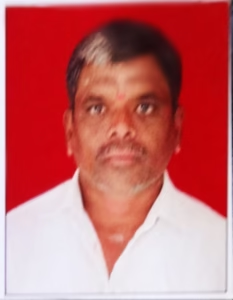
Laxman Gavsane, 42, died by suicide in September 2025 in the aftermath of the extreme rainfall
 Jaideep Hardikar
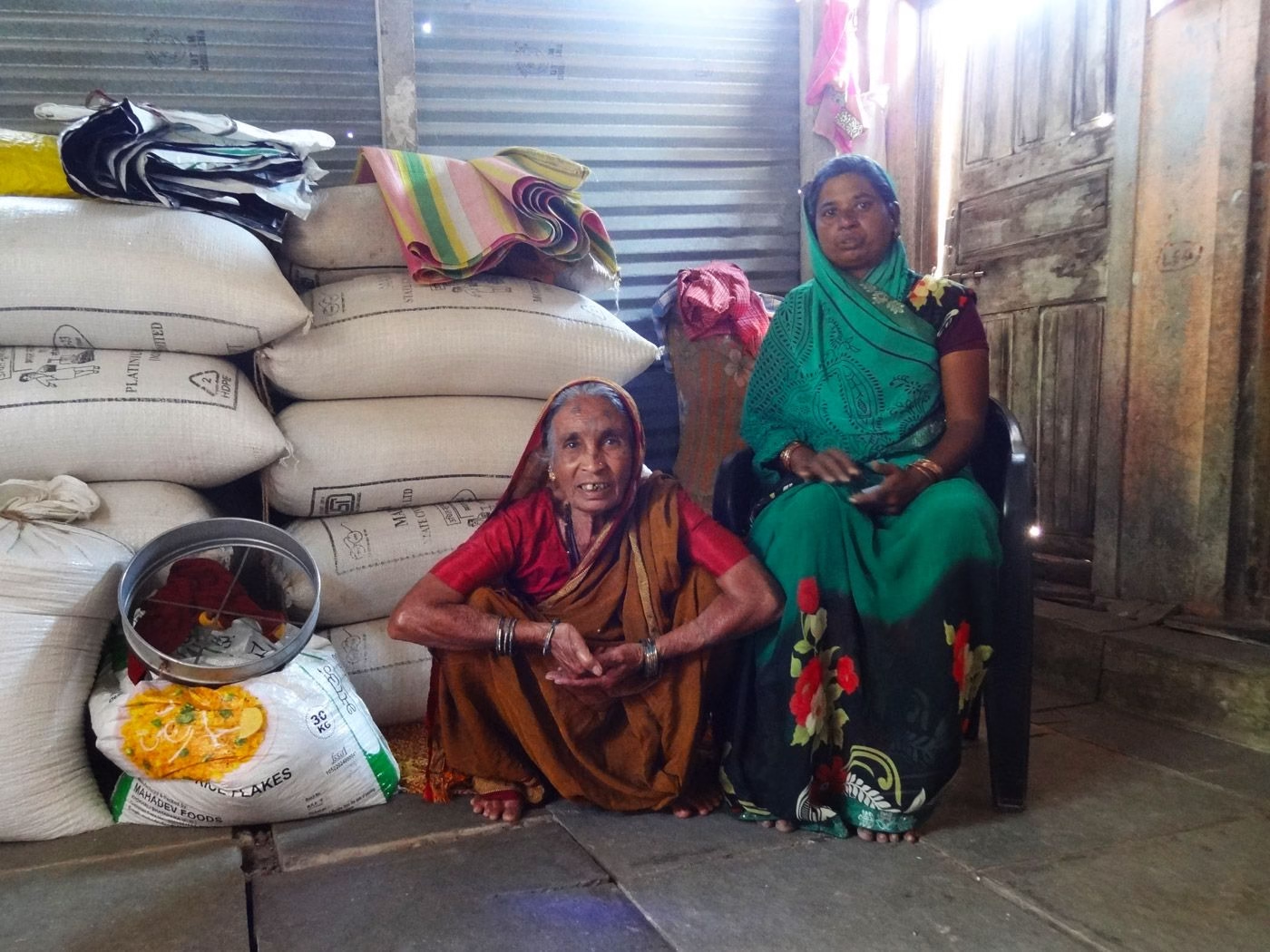
Shivkanya Gavsane, Laxman’s wife, has since returned to working as a farm labourer in her village to keep her two children in college
The village, Dahitane, in Solapur’s Barshi tehsil plunged into grief even as rain continued to hammer the soil, and all hopes of a decent crop lay crushed. Gavsane was a dryland farmer, cultivating soybeans on an acre-and-a-half of his plot. Earlier this year, he spent about Rs.50,000 on his surgery for piles, the money borrowed from friends and relatives. On her part, Shivkanya took loans from self-help-groups, all totalling Rs.50,000.
Things had come to a boil, a shattered Shivkanya, who works as a labourer, tells PARI at her cramped two-room home in the village bordering Beed and Dharashiv districts on two sides.
The Gavsanes needed Rs 13,000 a month to fund their children’s education – hostel, food, and college fee. Given this year’s relentless rain, the couple failed to find work – neither on the farms nor in towns. They also lost their own crop. This is a district known for sugarcane and grapes, but in this arid region a large number of small farmers with no access to irrigation cultivate soybeans, maize, jowar and other food crops, but lands have abysmal productivity.
“We had nothing but despair,” his wife, a pale shadow of herself, mumbles, having returned to her work, forgetting her bereavement, driven by the need to educate her children.
 Jaideep Hardikar
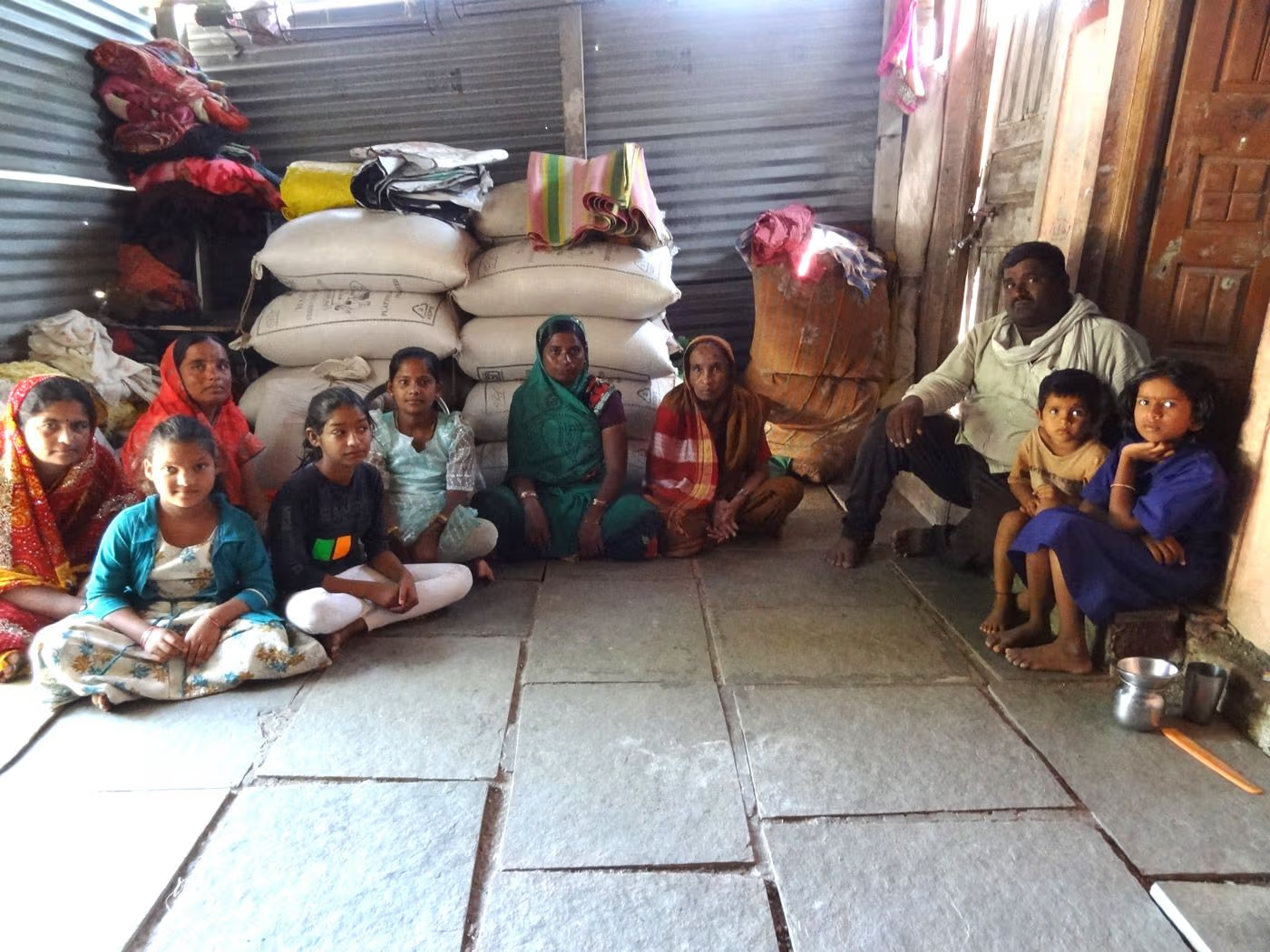
The bereaved Gavsane family – Shivkanya with her grandmother Shakuna Akkalkote, Laxman’s younger brother Sagar (right), his wife Jyoti, their neigbours and children
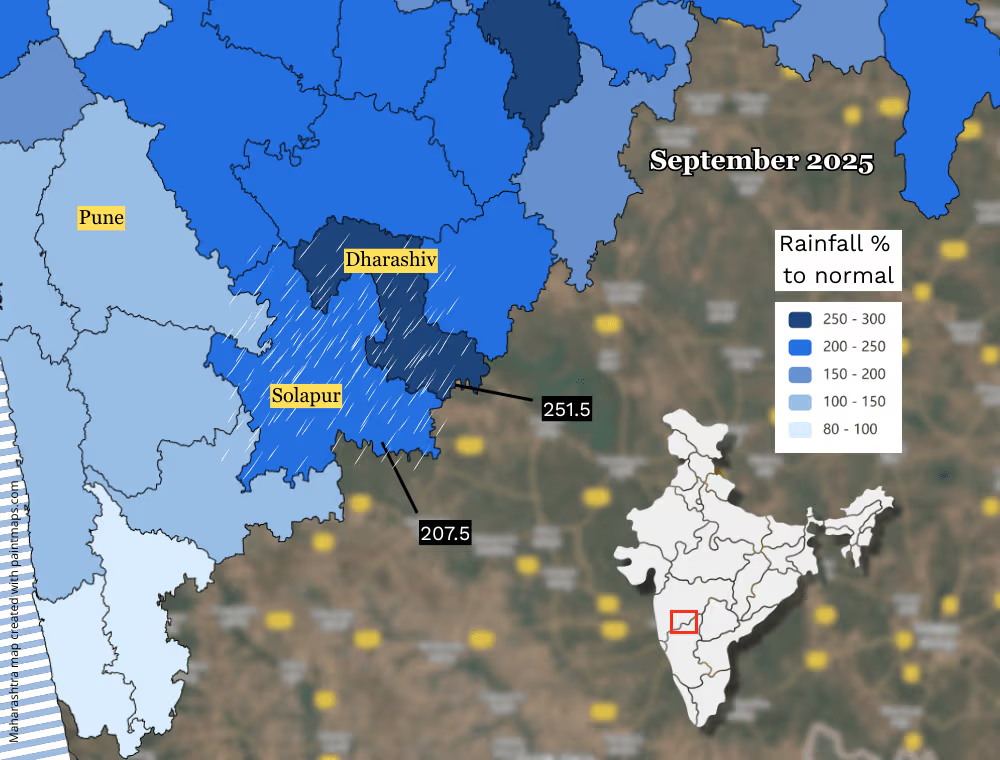
The day Gavsane died, local newspapers reported four more deaths by suicides in the vicinity. Solapur district had received high rainfall till the end of August 2025. Between September 20 and 25, the district received 365.8 mm of rain. State data reveals, it was 1,253 per cent higher than the long term average of 30 mm for the month. Circle-wise variation was stark – and crushing.
In the Shivar Helpline office, as calls multiplied by late September, it became clear that people were not just reporting crop loss or financial ruin. They were expressing something deeper: the shock of unpredictability, the psychological violence of climate chaos, the tussle over limited resources, cries for relief and rehabilitation, help for children’s education, even for clothes and sheets…
For eight days, between September 20 and 28, powerful weather currents rolling in from the Bay of Bengal unleashed one spell after another over Marathwada and western Maharashtra, turning the otherwise dry river-beds into violent rivers tearing through the fields that had barely begun to recover from a delayed monsoon. People in this part could handle drought, never floods.
Villagers repeatedly describe how small, familiar streams became violent rivers and left their farms, homes and villages, totally ravaged. How rains did not abate for days and small ponds burst, lakes overflowed.
 Design courtesy: Swadesha Sharma
The 2025 flash floods following extreme rainfall is the latest in a series of challenges facing the peasantry. For nearly three decades, the Vidarbha and Marathwada regions, have been in the throes of a deepening agrarian distress
Dharashiv district alone received 376 per cent more rainfall than normal in just one week — a figure that sums up the scale of the catastrophe better than any official description ever could.
The State’s assessment is that kharif crops over 44 lakh hectares, or a third of the net sown area in Marathwada’s eight districts, have been irreparably damaged. State-wide, the damage is estimated across 75.42 lakh hectares of land. That apart, about 3,600 houses were damaged, 224 human lives and 600 livestock heads were lost in the flooding.
The ecological, social and emotional consequences are long-term. Floods wash away riparian vegetation, degrade riverbanks, and contaminate drinking water sources. They also disrupt groundwater recharge by eroding the natural connectivity between run-off, recharge, and discharge zones. Socially, floods deepen rural vulnerability: families lose crops, livestock, stored grain, and essential documents. Many are forced into cycles of debt and migration as repeated losses erode their resilience.
“Social, cultural, political and economic circumstances define the mental health of people during disasters,” says Dr Subhasis Bhadra. A Professor and Head, Department of Psycho-Social Support in Disaster Management, at the National Institute of Mental Health and Neuro-Sciences (NIMHANS), Bengaluru, has led studies and mental health interventions in some of the most devastating natural calamities in the country for the last 25 years. He cautions that you cannot see mental health interventions in isolation from other factors. The interventions therefore need to be placed at the individual, family and community levels, especially during the natural calamities.
 Jaideep Hardikar
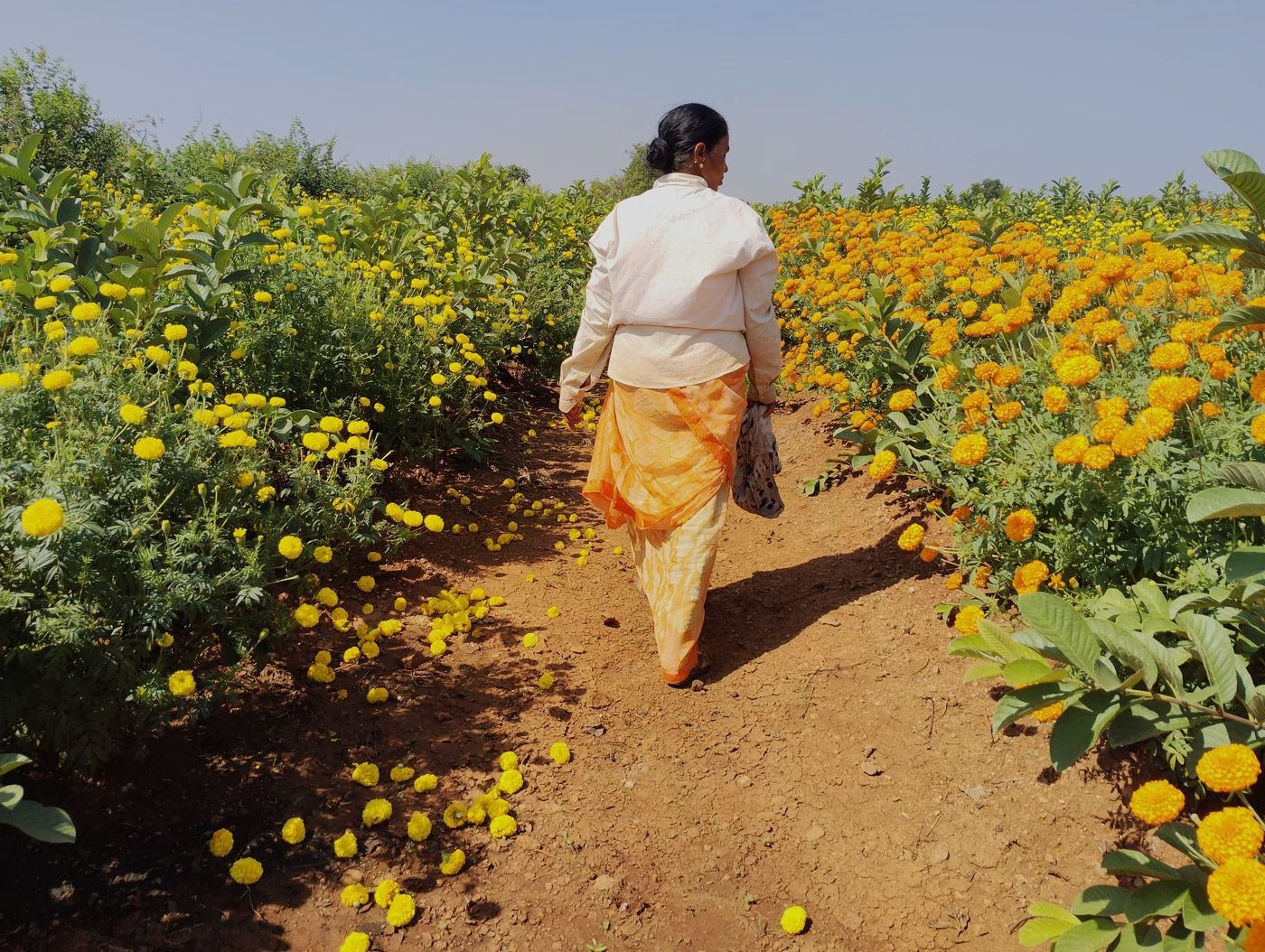
Janabai Dattatray Yadav switched to marigold farming after successive years of drought felled her grape vineyard in Solapur’s Kari village
 Jaideep Hardikar
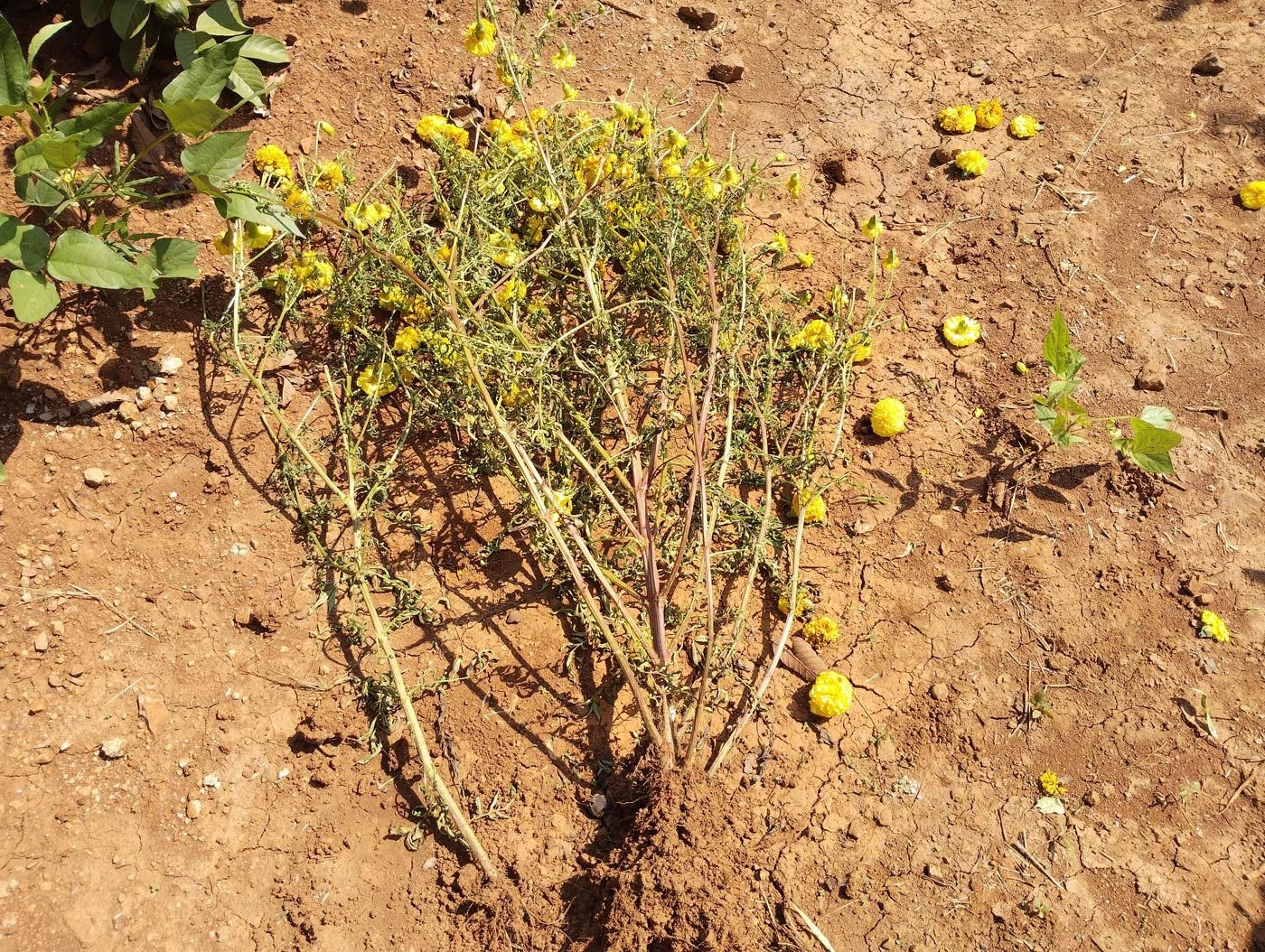
Uprooted marigold plants during the September 2025 rains. ‘Yavarshi pavsane ved lavle [This year rains were maddening],’ she says
“How quickly will people emerge from sudden shock is determined by the nature, scale, and quickness of the overall pre-disaster preparedness, during and post-disaster support systems in its aftermath,” he says.
Better the community bonds, better is the resilience, he adds.
*****
“On September 15, 2025, the village Kej in Beed district, received 150 mm rainfall in two hours starting 6 a.m; the village percolation tank cracked under pressure and water burst in all directions, with force. Trees were uprooted, water streams inundated the entire village,” says Atul Deulgaonkar, a Latur-based journalist, writer, and climate change educator.
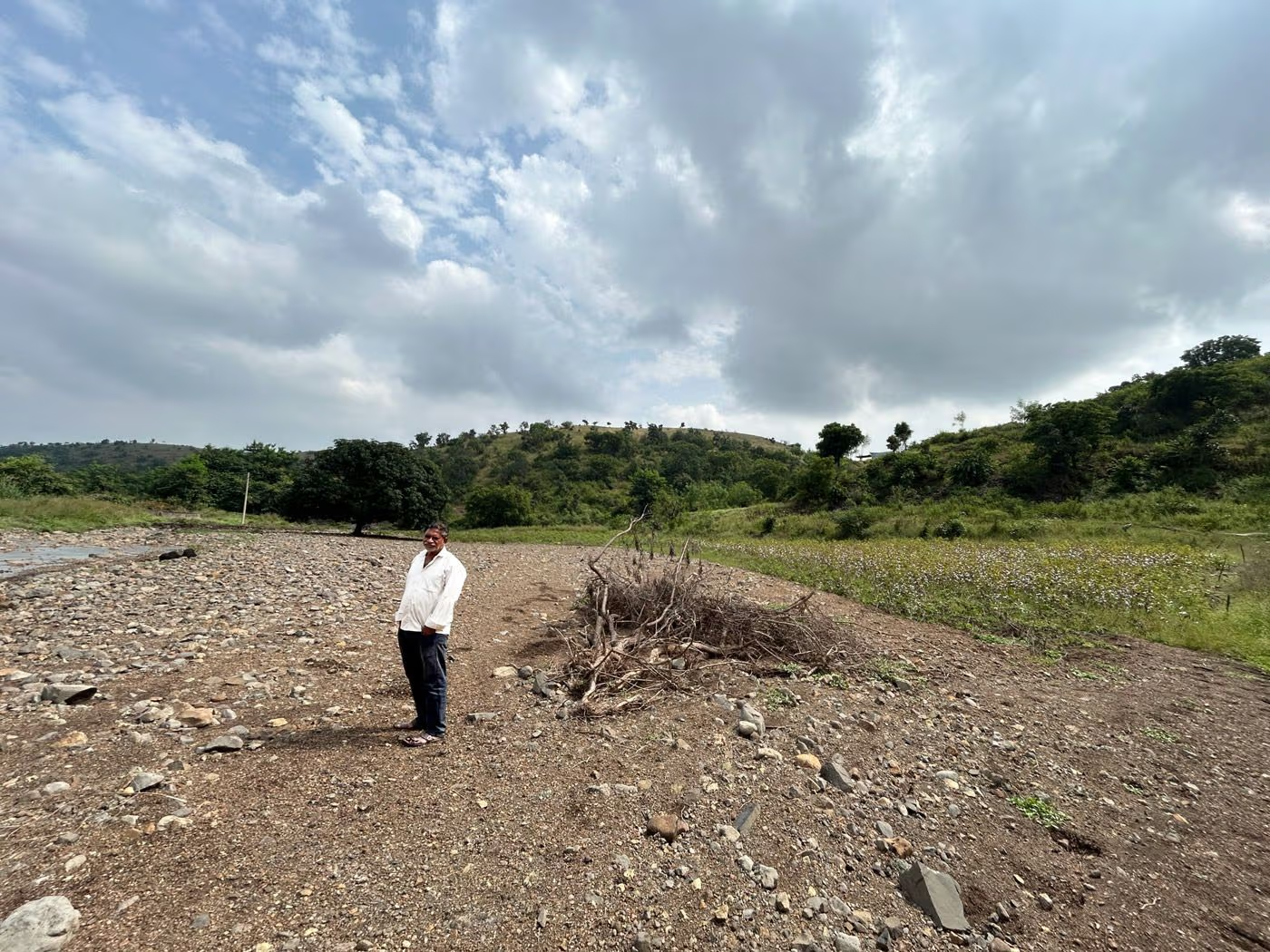
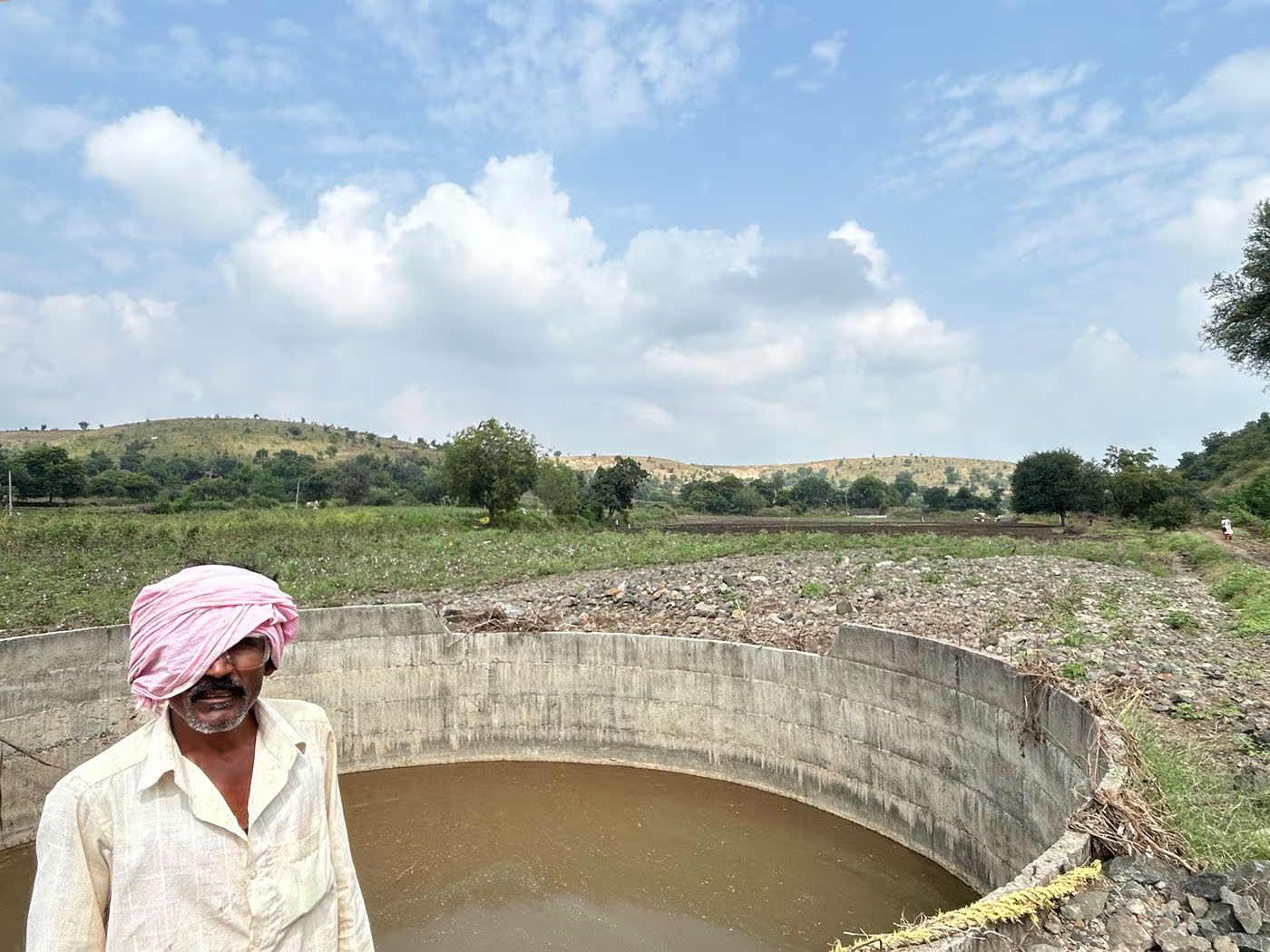
In Rakshaswadi village, Ganesh Sopan Gadade’s well was buried under silt, and when the waters receded, he found his farmland enveloped by football-sized rocks, and stones. “It will take him days, perhaps months, to remove the stones and rocks and make his land tillable again,” Deulgaonkar says and adds, “I think the farmer will get 150-200 tracker trolleys full of rocks and stones, but he has no money to hire man and machine.”
An October-2025 White Paper by climate scientists, agrometeorologists and civil society groups argues that Marathwada’s floods – and the mental health crisis they triggered – were not merely caused by rainfall, but by a systemic failure. Extreme weather events collided with ecological fragility and man-made water bottlenecks. September recorded 305 mm of rain in the region, 204 per cent above normal, with districts like Beed, Parbhani, Latur, Hingoli and Nanded breaking new records.
 Jaideep Hardikar
Ganesh Sopan Gadade, a farmer in Rakshaswadi village in Beed district, whose farm and open well is full of stones brought by the floods
Yet the disaster began earlier: June-July rainfall deficits stressed soils, followed by sudden surges in August that filled reservoirs while leaving the land unable to absorb water. By late September, silted rivers, undersized culverts, roads blocking drainage lines and poorly synchronised dam releases turned heavy rain into what the report calls “a preventable amplification of the flood.”
Marathwada, the report says, is no longer a uniform drought region but a patchwork of extremes — long dry spells intertwined with sudden bursts of extreme rainfall.
These conclusions are reinforced by the Mahapur Ahval (Flood Report, November 2025), a field-based study by the National Alliance of People’s Movements (NAPM). Deulgaonkar was a member of that study. It documents a shift from steady monsoons to short, violent cloudbursts.
The report abounds with testimonials of farmers, men and women, staring at a void, struggling to reconcile with the loss of their lifelong savings, years of labour, and modest dreams.
“We lost onions planted over six acres of land,” rues Gangabai Bandgar of village Pathri in Solapur. Water enveloped their farm and home. “How can Rs. 10,000 in government aid match that loss? What can we buy with that money? How do we survive?”
She is one of hundreds of distressed families.
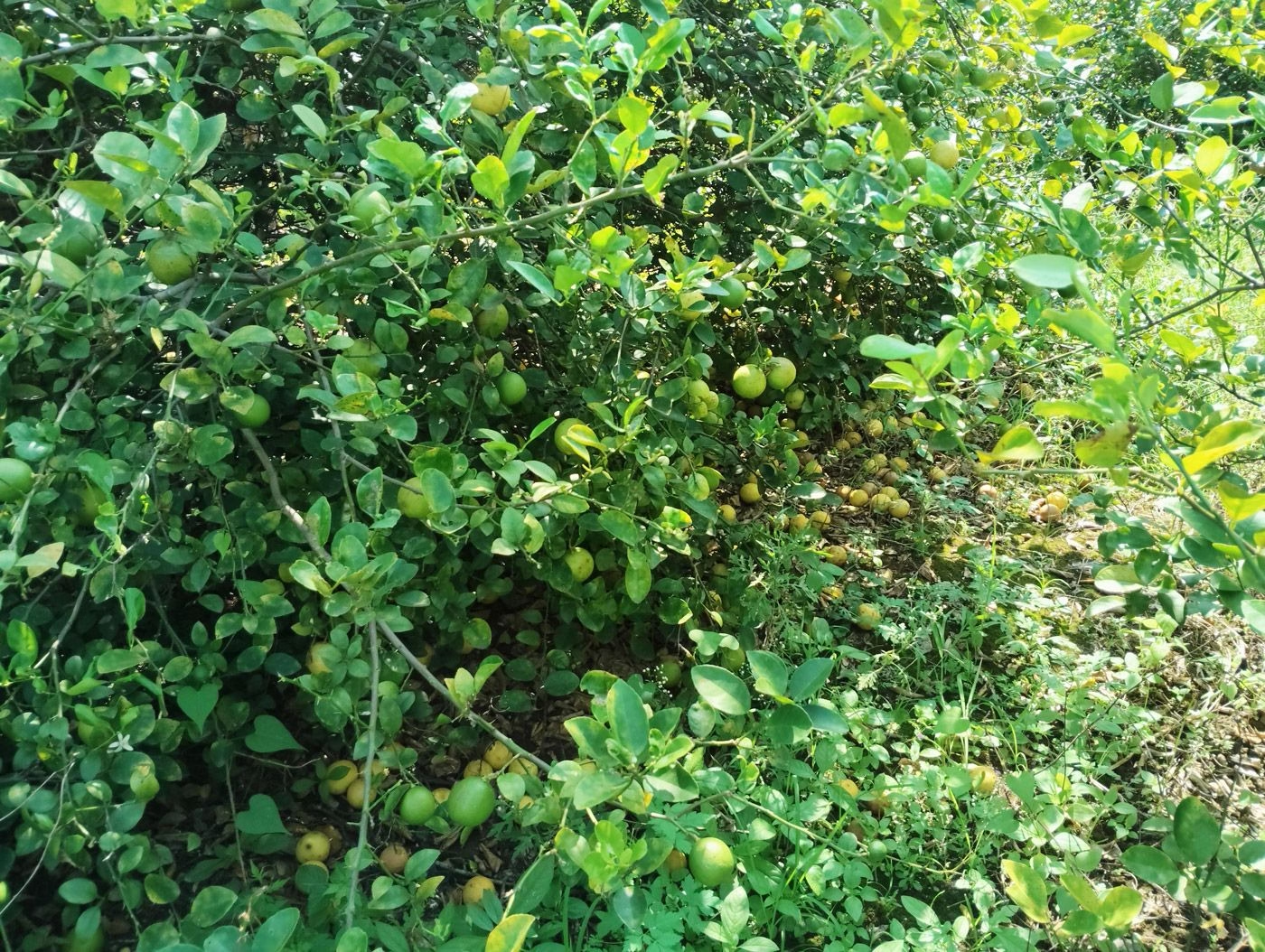 Jaideep Hardikar
The late Sharad Gambhir’s lemon plants were destroyed by extreme rain; fruits fell off the trees and rotted
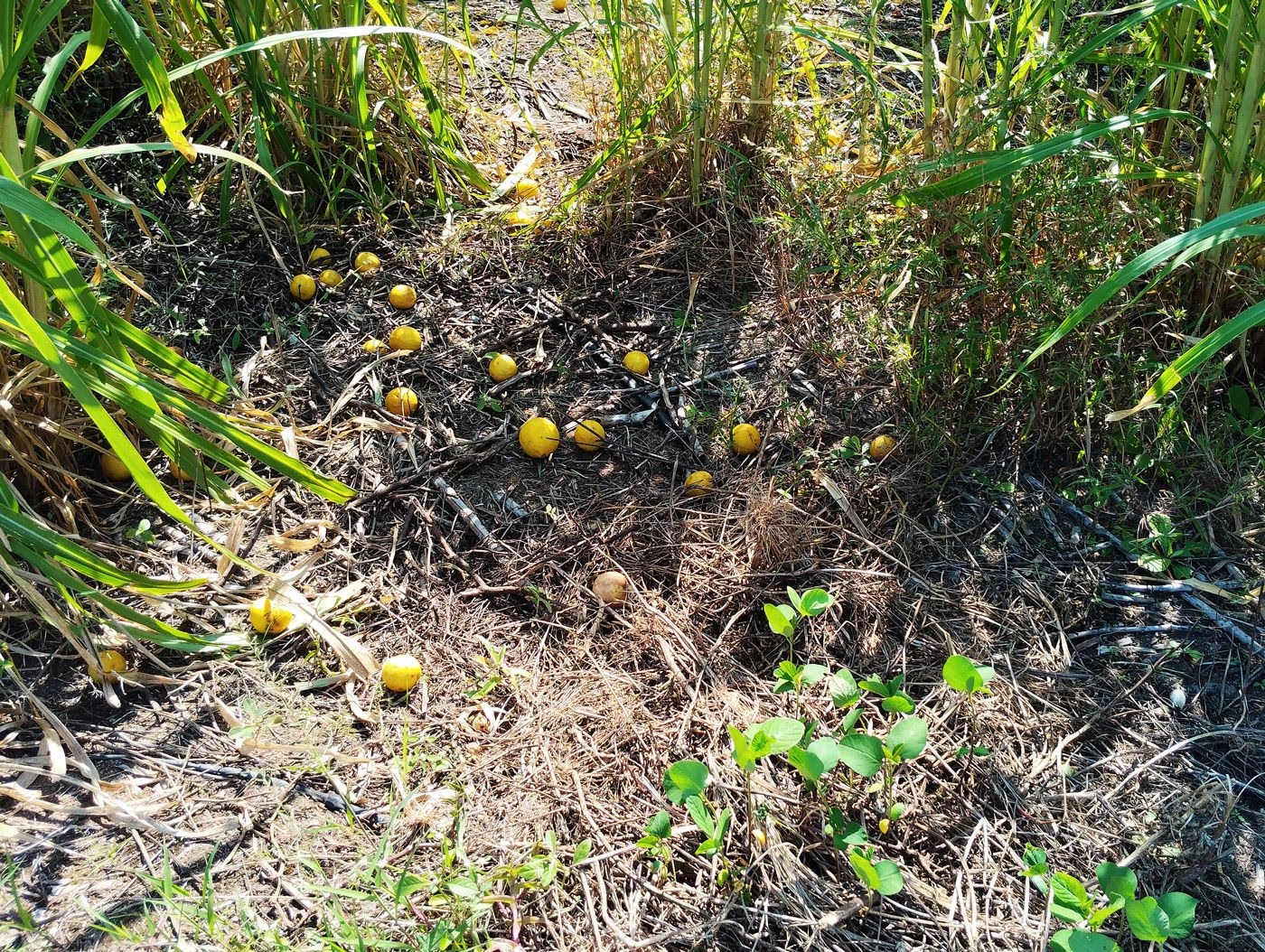 Jaideep Hardikar
Gambhir forlorn farm is a picture of rain-ravaged loss, his family’s years of toil reduced to nothing
Locals say many hamlets witnessed sudden surges that flooded homes and fields before people could react. These are what the report calls “artificial floods”— not solely the result of rainfall, but of human-driven blockages: choked nalas (drains), culverts too narrow for modern flows, unplanned rural roads acting as embankments, and the near-disappearance of wetlands that once acted as sponges. Both reports suggest that unless corrective measures are taken, Marathwada would continue to oscillate between two extremes: drought and floods, in the same season.
***
As the relentless rain and floods ravaged Marathwada and western Maharashtra, phones didn’t stop ringing in Shivar Helpline for hours running into days.
Starting Dussehra until the end of Diwali (till end October) Hegana did not go home.
“Thirty-one days on the trot,” he recounts. “We were in a war-like situation.”
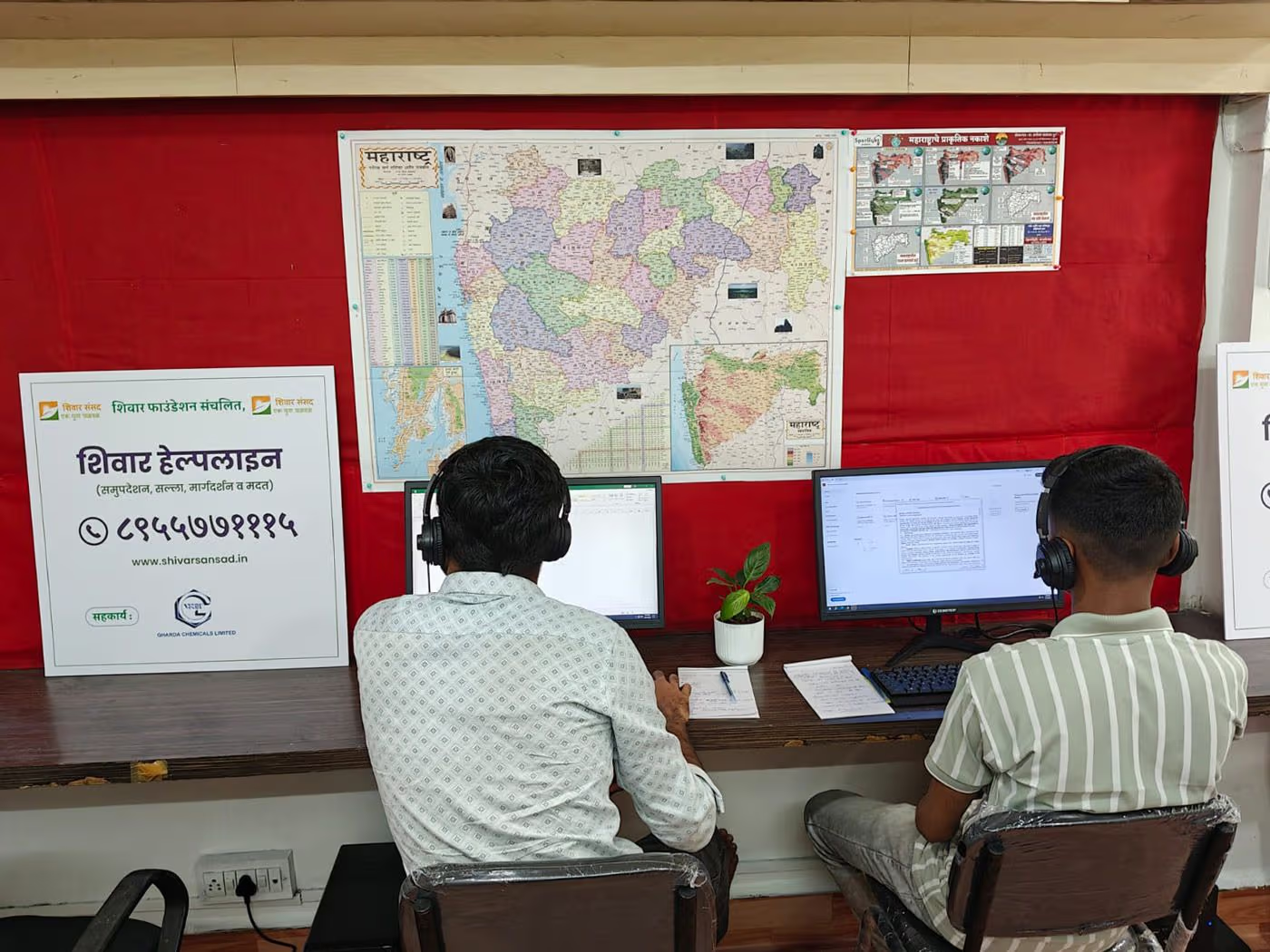 Jaideep Hardikar
‘Climate disaster is not just an economic crisis,’ Hegana says, ‘it’s also a mental-health epidemic’
He slept on the office floor. He ate once a day or not at all. He would step outside only to catch his breath. Even now, when he speaks of those days, his voice softens: “The landscape was drowning in floods; people in their own minds.” Yet the helpline grew — not because of its phones or systems, but because of Hegana’s refusal to see mental health support as a luxury.
Every caller was on the edge, he says, contemplating self-harm. “We could not afford to turn down any calls; for, it could result in loss of lives,” he recounts. At times he felt stressed, but the urgency of the calls kept going. “I would think, if I did not pick a call because I was tired, it might lead to someone taking his or her life, and literally it was like that. I always felt good that I answered a call because a life was saved.” Not just him, all helpline members were at it.
Many unsung donors, individuals, and the Shivar Helpline’s friends channelled resources to send help to extremely needy families. Even today, he requests generous donors to send help in cash or kind to distressed farmers, desperate for a helping hand.
Hegana and his team use counselling tools to cope with their own stress, but he says, “we need a support system for ourselves; since it involves costs, we can’t do it right now.”
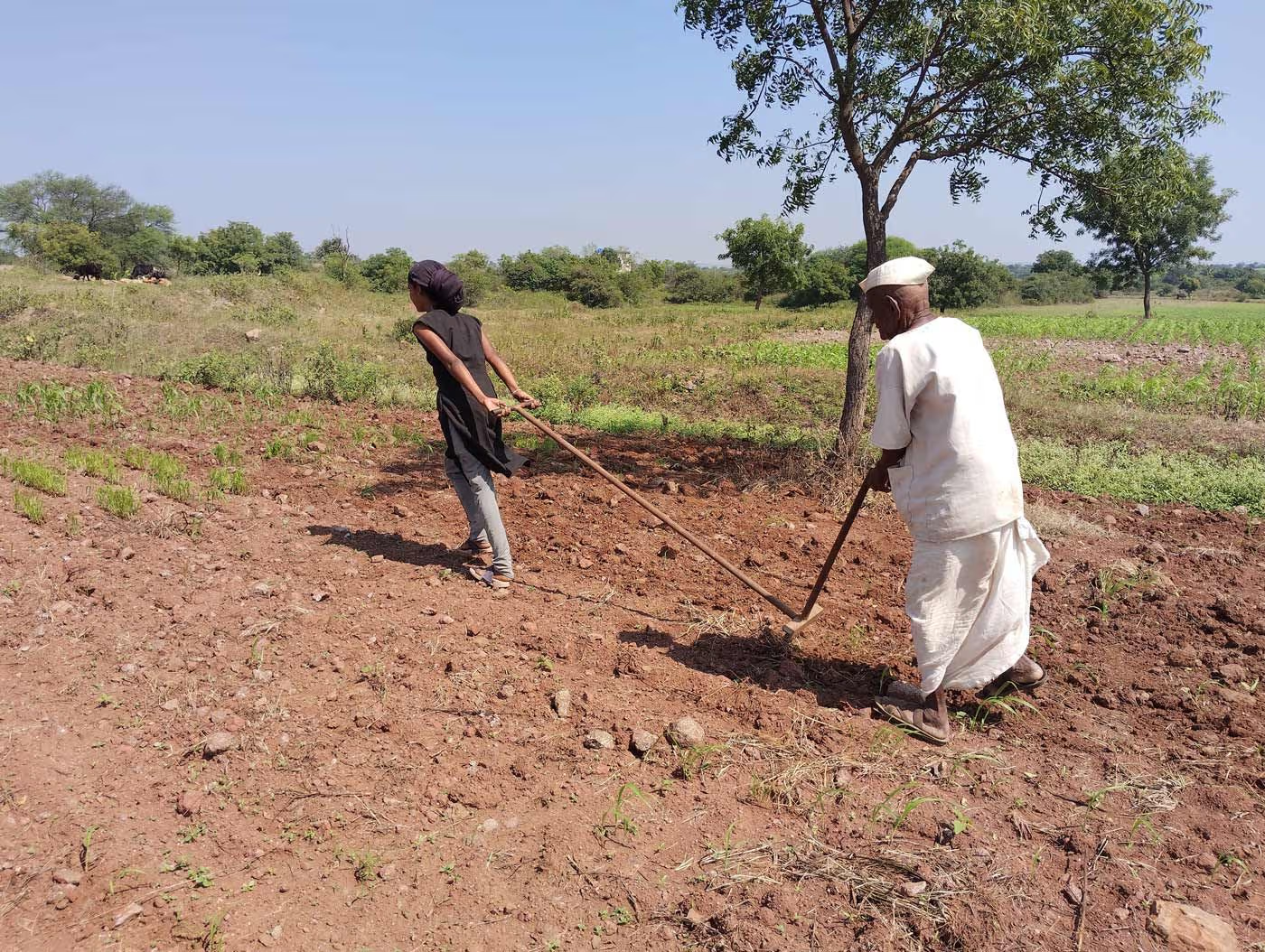 Jaideep Hardikar
At 80, Manohar Gite had to return to manual farm work as heavy rains ruined his rented four acres of soyabean, and they could ill afford a tractor to do the work. His grandchildren keep him company
This Diwali was an exceptional period, he says, but every year some or the other farmers are in distress. “I haven’t celebrated a Diwali in the last 10 years,” counsellor Hegana. “One October night, we received 47 calls – from 10 p.m. to 6 a.m. Every caller had a suicidal thought.”
One day, close to 12 at midnight after the interns had left. Hegana sat in his cabin, sorting notes from the day, when the phone rang. He thought of letting it go. But he didn’t.
On the line was a young man from Solapur’s Madha block. He spoke slowly, breath catching. He had been waiting for the night to fall and his family members to sink into deep sleep.
“Sir, he said, I have been thinking… if I go to sleep tonight, maybe I shouldn’t wake up.”
“All my thoughts and tiredness melted; I straightened in my chair and told him to narrate his story,” Hegana recounts. The story was no different: Flash floods, spoiled soybean crop, a sick mother, a loan agent who visited that morning, the unbearable shame of failure.
For 35 minutes, the two spoke. They exchanged words, also silence.
“At the end he said, ‘at least you listened to me and you’re the first person who didn’t tell me to be strong’.”
That was one life saved – Hegana thought to himself that night.
“Just listen, don’t sermonise, don’t lecture, hold their hand, I tell myself every time I get a call.”
In the chaos caused by climate change, that may be the most radical act of rebuilding mental and emotional health.
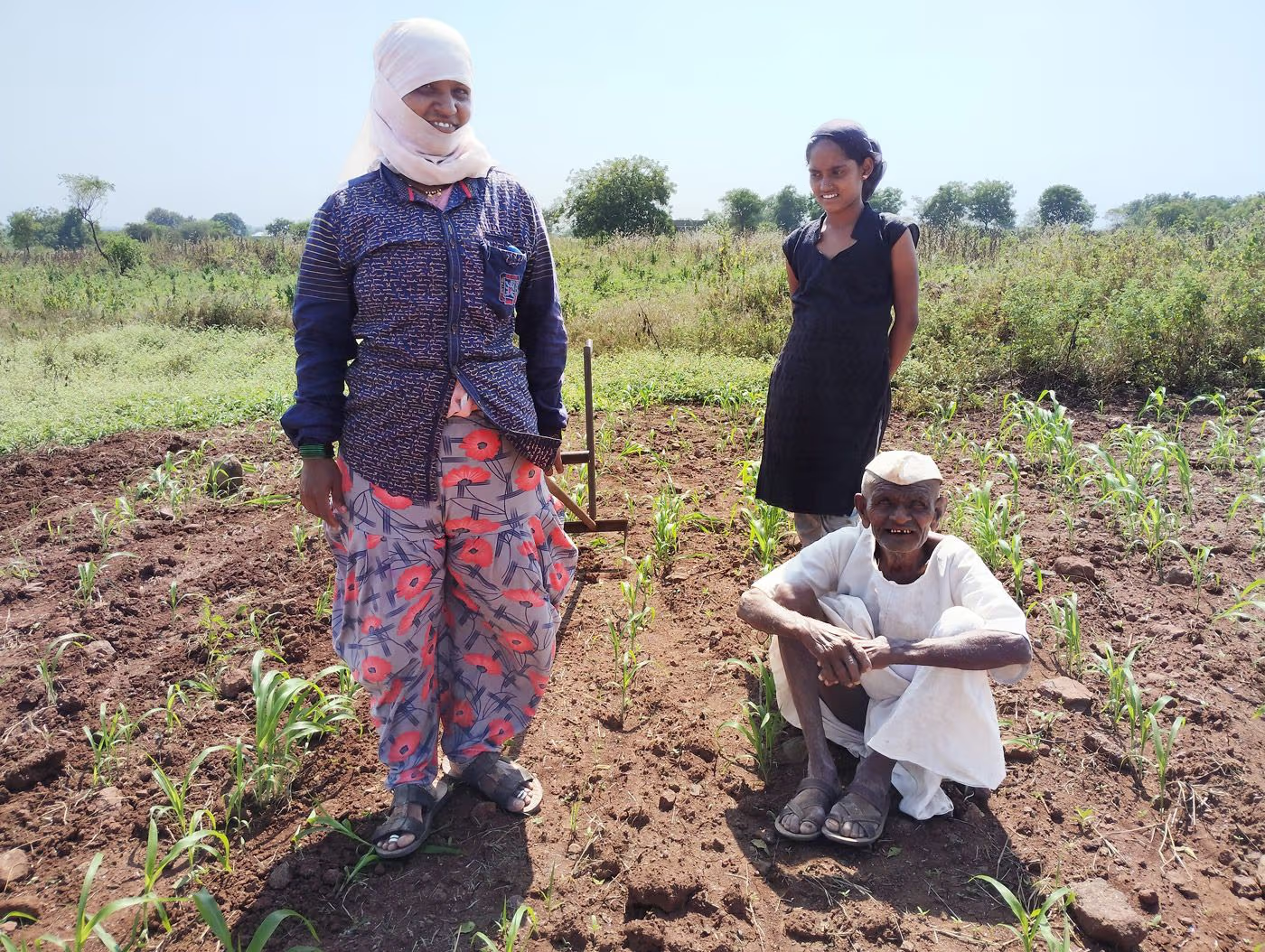 Jaideep Hardikar
Manohar with his daughter-in-law Rupali and granddaughter Jahnavi, get the land ready for sowing operations for the rabi crop of jowar (sorghum). The family belong to the Lonari community and are landless
***
Hegana grew up in a small village in Kolhapur where the calendar revolved around rain cycles, crops, and the quiet tragedies that marked them.
In college, he trained as an agriculturist, and much later as a psychologist, but he says his education began much earlier, in the silences of farmers who rarely raised their voices about pain.
“I would have followed the same route – preparing for state or union public service commission jobs as is the trend,” Hegana says. “My teachers motivated me to do something meaningful.”
His teachers perhaps saw in him a dreamy young man keen on public service.
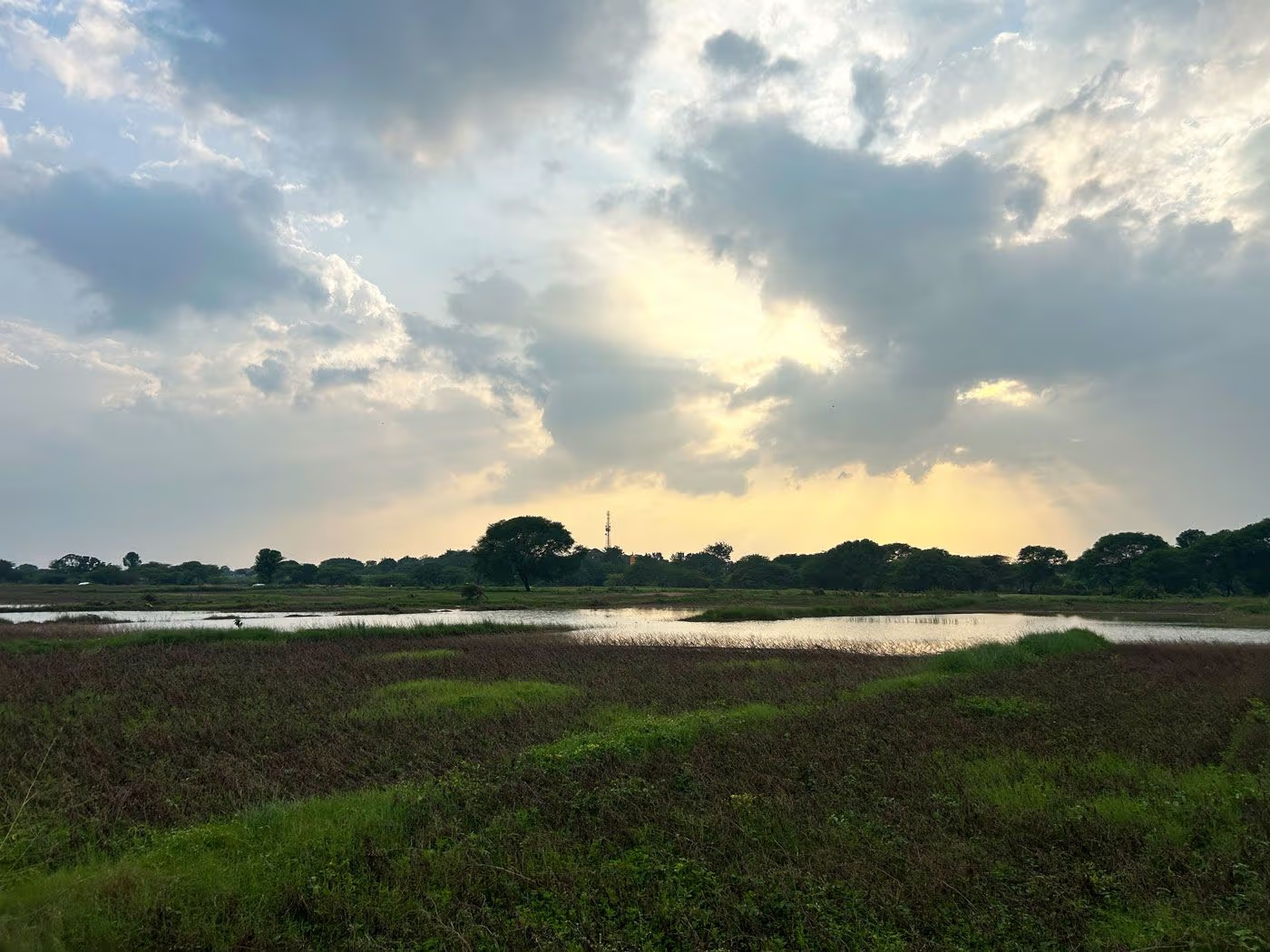 Jaideep Hardikar
Sudden surges that flooded homes and fields were not solely the result of rainfall, but of human-driven blockages
For a year, he travelled across the state on a shoestring budget, lived in villages prospecting his future work, and learning from them. He focused on rural youth, educated, jobless, and with no opportunities. Shivar Helpline emerged organically, Hegana says, and he settled on Dharashiv, where he saw no supporting hand for distressed farmers.
In 2017, the Shivar Helpline pilot seeded in 25 villages.
The early days were tough: second-hand desks, a single phone, a few local volunteers, and a young man trying to teach himself how to stop people from ending their lives.
Gradually, the calls began to rise. Men who couldn’t repay loans. Women whose husbands had died by suicide. Students dropping out of education in the absence of financial support.
Dharashiv is among the most arid, rain-deficient districts of Maharashtra; it falls in the so-called rain-shadow zone. During the Covid-19 epidemic and following it, the distress deepened.
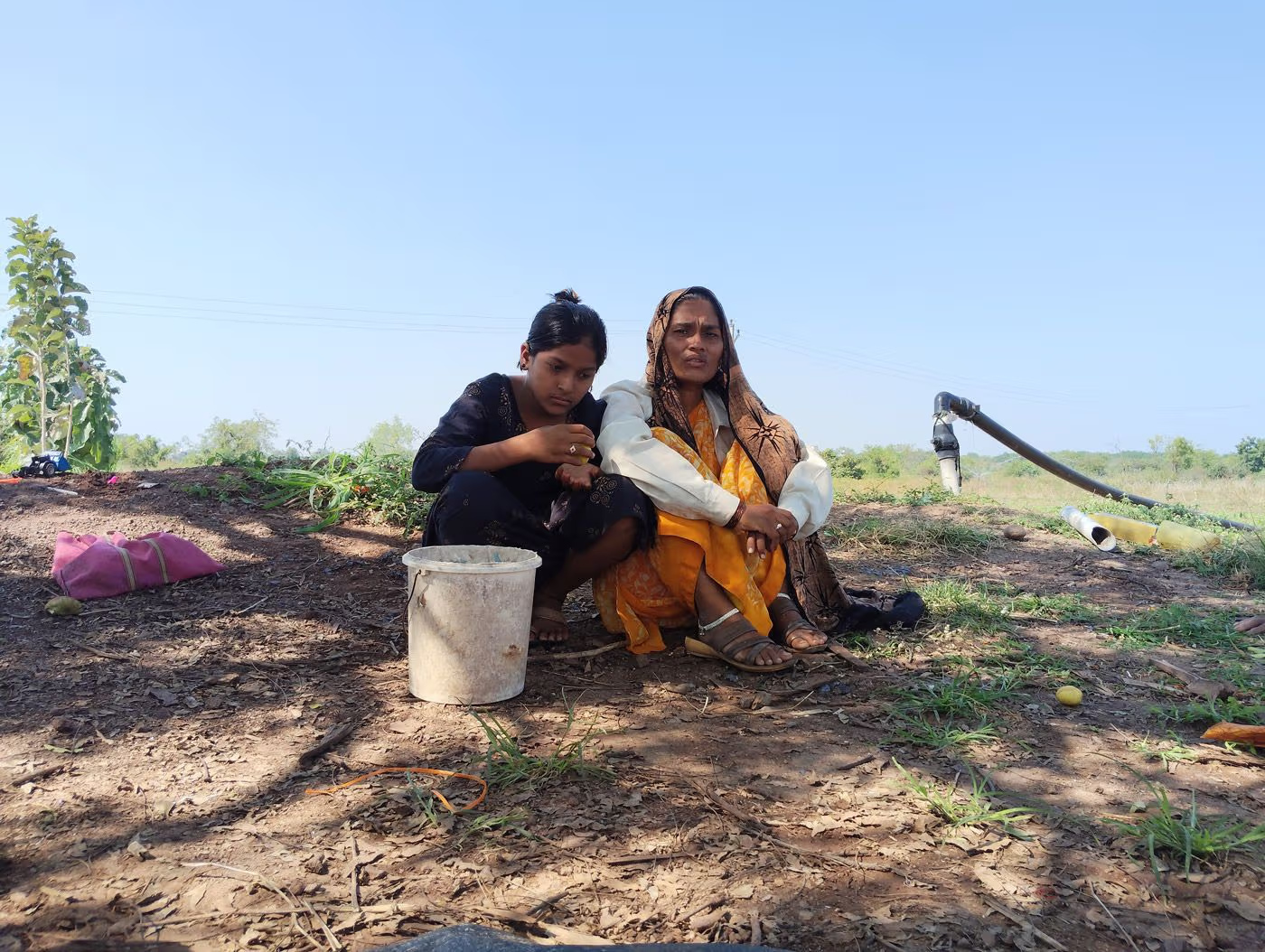 Jaideep Hardikar
Gambhir’s wife Devshala works as a farm labourer in Kari village
He designed the FDQI – or the Farmers’ Distress Quotient Index – to classify callers into low, moderate, and high-risk. The high-risk ones he attends personally and continues to follow up.
Since he started the helpline, Hegana says, his team has mapped at least 27 different reasons for people from rural Maharashtra to be mentally stressed out, reasons that are under-acknowledged in the policy circles. “One of the reasons is a constant feud with neighbourhood farmers over the access to farm-roads, something that can be easily resolved by district revenue officials,” he says.
The counselling approach differs in each of the three scenarios. “Once we bracket the callers in the three different categories, we choose the approach.” That there are so many callers in itself is a vindication of the idea, he says, but since they are learning, it would only get better with time.
Hegana focuses on two verticals: One, mental health counselling, and two, village-level interventions. “We have to work on the stressors that trigger the mental health crisis,” he says.
The stressors are ubiquitous, exacerbated by climate emergencies – just like hundreds of villages experienced all through the monsoon, but more sharply from September 15 to 25.
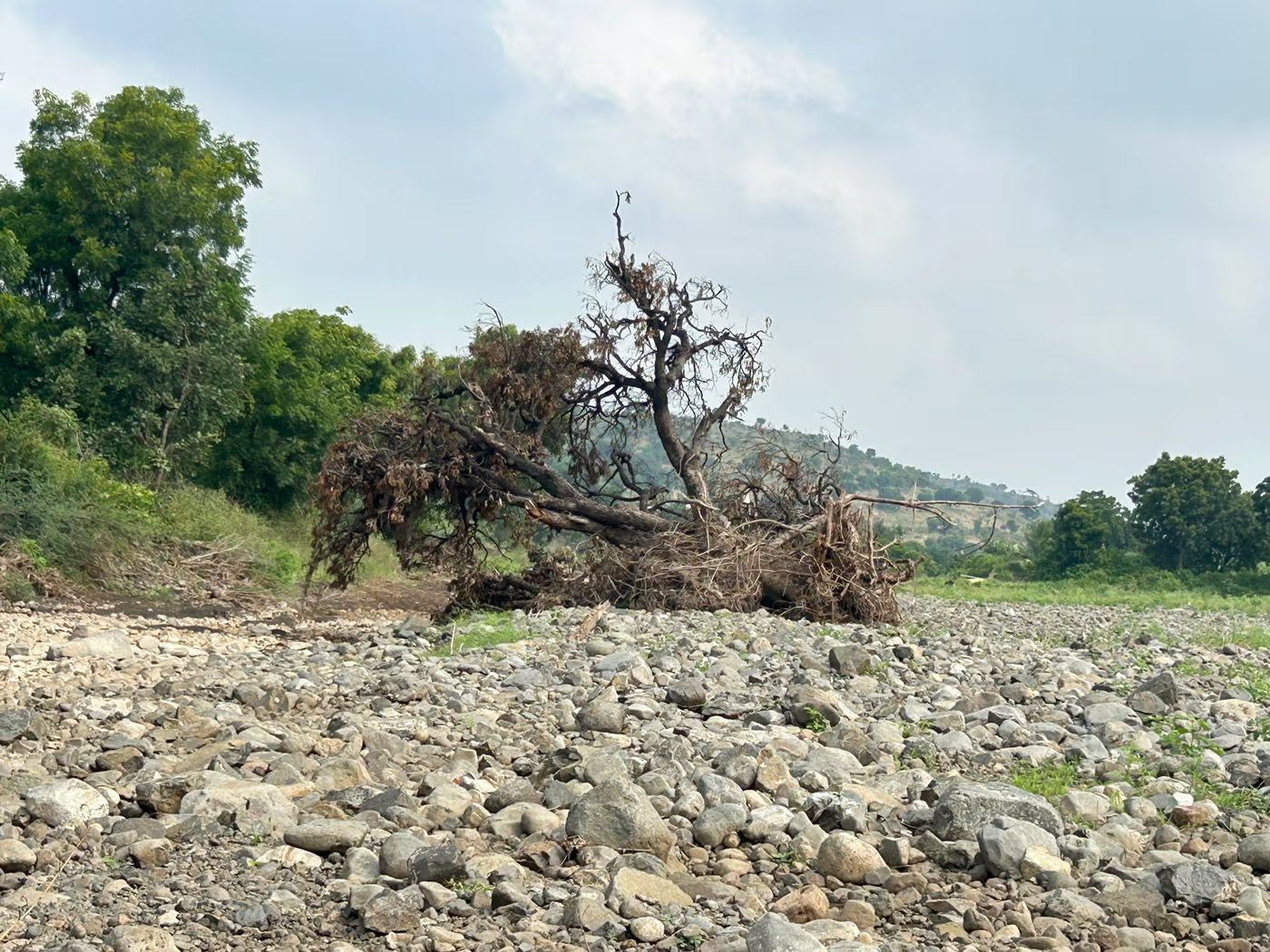 Jaideep Hardikar
A farm in Kej tehsil of Beed district, laden with big boulders and stones that came along with the floods and wrecked standing crops. The floods also uprooted big trees
The helpline addresses the first challenge: that of the mental health epidemic. But the stressors that push the individuals into a vortex of mental health issues need a long-time fix; from actual field-level interventions to the policy-redressal. Hegana floated Shivar Foundation, a non-profit, that he says would collectivise farmers and youth and work on constructive interventions.
“For instance,” he says, “we have mobilised widows in Dharashiv, who need work – we need to create livelihoods by tapping into the private and public sector to ease their financial stress.”
He aims to build an agri-psycho-social model, which would be the Shivar Model. Simultaneously, he says, the foundation would try to build a replicable and easily accessible mental health support model for farmers. There should at least be counsellors to lend an ear to the ones in distress. “When stress on farming goes up, it adds to social stress and impacts mental health,” he says. So, having a phone line available round the clock helps avert the extreme reaction, he says.
Hegana liaises with the respective district collectors and state line department officials wherever possible and connects farmers to the government to leverage state aid. Many officials are helpful. Yet, he says, the response is inadequate. “We need to expand this work with a sharp focus.”
“Earlier this year, death by suicide of a father and his son in Nanded rattled me,” Hegana says. “I thought this helpline needs to be for the entire state, and we shifted our base to Pune.”
Jaideep Hardikar
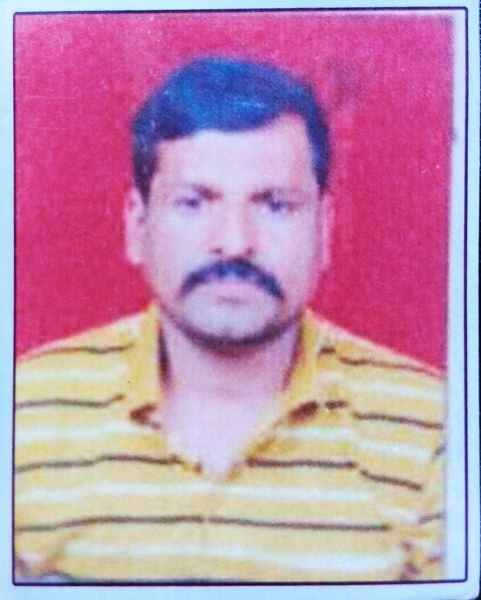
Sharad Gambhir was among the four farmers who killed himself in Barshi tehsil in September 2025
Jaideep Hardikar
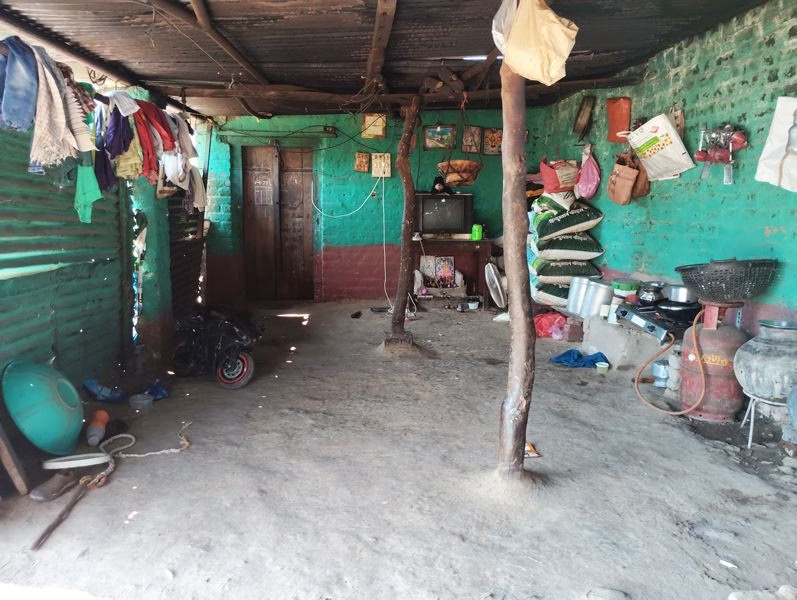
His village, Kari has reported multiple farmers’ suicides over the last two years
Last year, a generous donor helped them move to Pune to a centralized system that will scale up for pan-Maharashtra. Since 2023, as climate variability has worsened, he has sensed that the crisis ahead would be far more complex than drought. Scale, technology, and a central hub would help. September 2025 proved him right.
Yet – thus far – mental-health care remains invisible in climate-policy responses. The helpline’s own caseload – thousands of calls, hundreds of near-misses – is evidence of what happens when that invisibility persists. Hegana hopes the society looks at it as an urgent policy measure.
“Your soils may not heal quickly,” he adds, “but you may be able to save and rebuild lives.”
Shivar Helpline, to him, is climate adaptation, a crucial disaster response. As it proved this monsoon during and after that unprecedented deluge
“When you hear a long pause on the phone late in the day,” says Hegana and after a studied pause, adds, “you know that person is seeking help – and hope.”
(All names of volunteers and callers have been changed.)
If you are suicidal or someone in distress please call Kiran, the national helpline, on 1800-599-0019 (24/7 toll free), or any of these helplines near you.
PARI’s nationwide series on climate change and mental health is supported by the Mariwala Health Initiative. The series will investigate the impact of the climate crisis on the mental and overall health, and livelihoods of people in rural India and rural migrants in urban India.